Despite three years of investment, results of SFI soil assessments were never collected, missing major opportunity to build clearer picture of British soil
More than £65 million was handed to farmers under the Sustainable Farming Incentive (SFI) to assess and manage their soils, yet the government failed to routinely collect the results, a freedom of information request has revealed.
Between 2023 and 2026, almost 75,000 farm businesses participated in the scheme’s SAM1/CSAM1 soil actions, in which farmers were paid to assess their soil health, write a soil management plan and test soil organic matter. Payments to farmers for the actions totaled £65,383,489.
However, an FOI request sent by the Sustainable Soils Alliance (SSA), found that the results of these assessments were not collected from farmers or routinely submitted to the government into a central record.
Instead, information was only requested by the Rural Payments Agency (RPA) on an ad-hoc basis as part of their inspection process.
SSA director Matthew Orman said: “Farmers were asked to develop soil management plans, but we don’t know whether they were implemented, what the results were or what their experience or learnings were.
“Similarly, soil carbon audits were subsidised but the results were not collected – results which could have been invaluable for feeding into the national baseline or identifying degradation hotspots that future schemes might target,” he added.
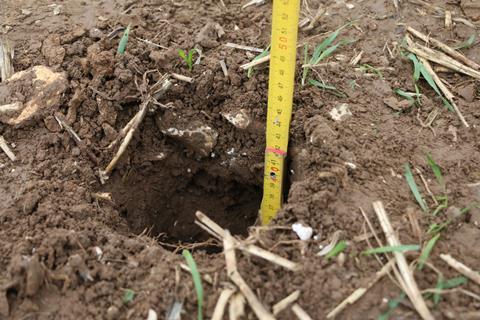
The soil actions required farmers to assess the structure and biology of their soils to evaluate risks such as nitrogen leaching and runoff, as well as producing a management plan outlining strategies to protect the quality of their soil.
Orman said that SFI data could have made a significant contribution to understanding the state of soils, particularly as extreme weather this summer highlighted the importance of soils for farm resilience.
He said: “There is a huge black hole in our understanding not just of the state of English soils, but farmers’ knowledge and appreciation of them and the information and support they need to implement changes.
“Soils data needs to be understood as a public good in its own right, and we urge Defra to […] generate usable data and drive practice change,” Orman added.
He pointed to Northern Ireland’s Soil Nutrient Health Scheme (SNHS) as a positive example of a funded baseline programme Defra could learn from.