A collaborative research effort between Harper Adams University and Warwick University Crop Centre is developing drought-resilient lettuce, brassica, carrot and onion crops
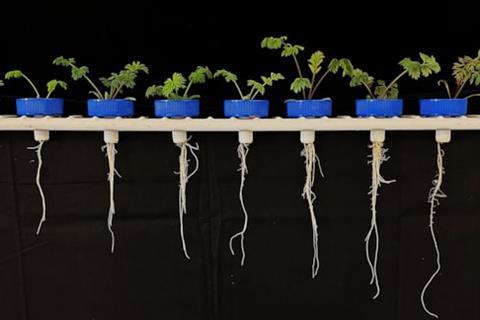
Research at Harper Adams University is helping to develop crops capable of withstanding droughts.
The Vegetable Genetic Improvement Network (VeGIN), a research effort established between Harper Adams University and Warwick University Crop Centre, aims to develop new varieties with improved abiotic stress resilience.
The research is timely, with drought declared across all of Wales and over half of England at the time of writing. For some areas of in southern England, July 2026 was the driest month ever recorded by the Met Office.
Professor Jim Monaghan, director of Harper Adams’ centre for crop and environmental science, said: “We are growing crops in the most challenging conditions for generations. Both lack of rainfall and abnormally high temperatures are detrimental to crop production, because these stressful growing conditions reduce yields and quality.”
Researchers are exposing plants to simulated drought and heatwave conditions to identify the traits and genes that enable some varieties to cope better with environmental stress.
Once identified, these characteristics can be incorporated into commercially viable varieties through plant breeding.
The project has already identified several promising varieties across a range of vegetable crops, with further work underway to expand those findings.
Dr Ashley Garrison, a VeGIN researcher, said: “Over the last year, we have identified the lettuce varieties which are most resilient to heat and drought stress, brassica lines that grow deeper root systems to potentially increase water uptake, and coriander varieties that are resilient to heat-induced flowering.”
Researchers are now examining those lines in greater detail. Dr Andrew Beacham, senior lecturer and VeGIN lead at Harper Adams, said: “For lettuce, we are examining the best and worst performing lines in more detail, including the underlying genetics responsible based on earlier screening work.
“For brassica, we are investigating root traits in selected extreme lines at multiple growth stages – and for carrot and onion, we are screening diverse plant populations at the seedling stage and will then investigate the extreme lines in more detail at a wider range of growth stages,” he added.
VeGIN works with a broad network of UK and international vegetable breeders and producers to ensure its research can be translated into future commercial crops.
Beacham said: “Work within VeGIN itself is at the pre-breeding stage but traits identified and the lines possessing them, together with genetic insights, are provided to breeders for incorporation into existing cultivars.
“The speed of delivery of novel varieties depends on the process used,” he added. However: “The UK Government Precision Breeding Act 2023 permits the use of gene editing in plant breeding, which could accelerate the development of new varieties – and genetic tractability of the traits.”