Advertorial: The Port of Dover has almost eliminated its carbon emissions over the past two decades, underlining its sustainability credentials
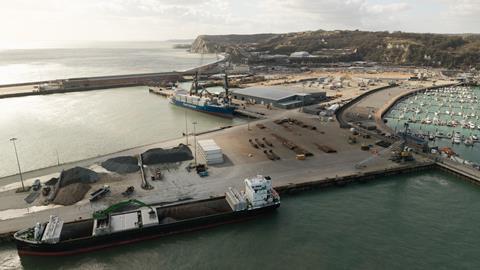
As supply chains evolve, sustainability is becoming increasingly critical to the fresh produce sector. The Port of Dover Cargo Terminal supports this with a 98.3 per cent reduction carbon emissions since 2007 and significant investments in temperature-controlled logistics at its BRCGS Grade A-accredited facilities, designed for the sustainable movement of perishable goods into the UK.
The movement of fresh produce through UK supply chains relies on agility, reliability and sustainability, more than ever. Port of Dover Cargo continues to invest in the infrastructure and environmental initiatives needed to support the evolving requirements of the fresh produce sector as one of the country’s most important gateways for temperature-sensitive imports.
Besides the port’s environmental commitments, it has also strengthened its position as a trusted specialist in temperature-controlled logistics. In May, the port successfully retained its certification to the BRCGS Global Standard for Storage and Distribution, achieving an improved grade of A.
Internationally recognised certification reflects the Port of Dover’s investments in food safety, quality assurance and operational excellence across its temperature-controlled handling and chilled warehouse facilities. These developments support importers of fresh produce and other perishable goods with efficient and fully compliant handling solutions close to the UK border.
Alison Hall, head of business development at Port of Dover Cargo, says: “We are delighted to have once again secured our BRCGS certification and to see continued progression in our grading. This achievement reflects the dedication of our teams to continuously improve and adapt to the evolving needs of our customers and the wider supply chain.”
In 2026, the Port of Dover achieved its ambitious net-zero (Scope 1 and 2) target for the 2025 reporting year, reaching the milestone 25 years ahead of the government’s own net-zero target and highlighting a remarkable achievement in its sustainability strategy. Since 2007, the port has achieved a reduction of 98.3 per cent in carbon emissions through investment in renewable energy and operational efficiency.
The port has sourced sustainable hydrotreated vegetable oil (HVO) and has introduced the fuel across diesel vessels, plant and machinery, as well as installing 1.5MW of on-site solar generation. On top of this, several small-scale improvements such as LED lighting and enhanced heating controls have reduced energy consumption across operations.
The remaining emissions have been offset through a regenerative farming initiative at nearby Bank Farm. They employ sustainable practices with a focus on improving soil health and reversing climate change. The port’s recent environmental reporting and carbon reductions have also been independently verified (against ISO 14064:2018 and the GHG Protocol Corporate Accounting and Reporting Standard), providing added confidence that its sustainability efforts are credible.
From specialist fresh produce handling to temperature-controlled storage and sustainable supply chain solutions, Port of Dover Cargo remains committed to the development of the efficient movement of perishable goods into the UK.
Find out more at portofdover.com/cargo