From 1 October, eligible abstraction licence holders can refill water storage reservoirs, but NFU say those facing most acute pressures risk being excluded
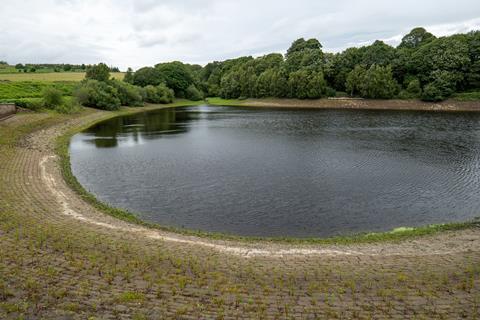
Farmers and growers in England can now abstract water outside the authorised abstraction period to fill existing water storage reservoirs, under temporary measures announced by the Environment Agency (EA).
A temporary Regulatory Position Statement (RPS), running between 1 October to 31 October, allows eligible winter abstraction licence holders to take water up to a month ahead of their standard authorised period.
The changes are intended to help growers refill on-farm water storage following this summer’s drought conditions, which placed significant demands on water resources and irrigation, with reservoir stocks declining rapidly.
The move also follows warnings that drought conditions could continue into 2027, according to water supplier Anglian Water.
However, the EA stressed that the measure is not a blanket relaxation of abstraction rules. The RPS does not apply to Principal Salmon Rivers or to catchments with a section 57 spray irrigation restriction.
“Where drought restrictions already apply, abstraction stays restricted. Existing licence conditions, including hands-off flow and level constraints, remain in force,” the EA said in a statement.
The move follows concerns raised by NFU members with on-farm reservoirs, who told the union that the period available to refill storage during winter was too short.
The EA has also introduced changes intended to make it easier for farmers to secure long-term licences by simplifying the process of providing evidence.
NFU deputy president Paul Tompkins said the changes were a “welcome step” following months of NFU campaigning.
He said the additional flexibility would help farm businesses manage the effects of a difficult growing season, while a simpler license application process could provide greater certainty and encourage investment in on-farm reservoirs.
However, Tompkins stressed that the changes would not benefit all farmers, particularly those facing the most acute water pressures.
“These changes will not help everyone,” he said. “Some of the farmers facing the most acute water pressures may be excluded from the winter abstraction guidance change, including businesses in the most water stressed areas.
“We will continue to make their case and work with the EA to ensure farm businesses are able to be resilient to drought,” he continued.