Trials across Europe and UK also show stronger table grape stems, less decay and bunch detachment as a result of Vidre+ smart-label system
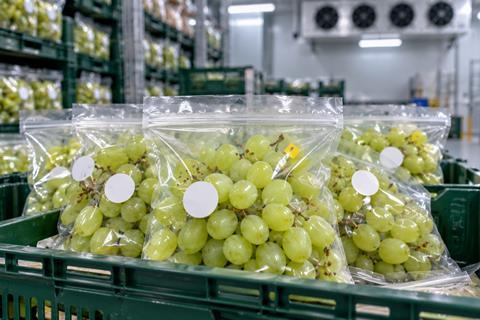
New research by Polish food agri-tech company Fresh Inset suggests its Vidre+ smart-label technology could extend table grape shelf life by around five days, representing a 35 per cent improvement.
The company’s Vidre+ technology is designed to slow ethylene production by using 1-MCP, a substance that slows down ripening process and protects quality.
For fresh produce use, it can be applied to packaging as a sticker or incorporated directly into film and cardboard packaging.
The trials found improvements in grape stem appearance, berry condition and resistance to decay, with the biggest gains recorded in reducing berry shatter.
The findings are based on nine post-harvest trials conducted in Italy, Greece, Spain and the UK, involving 38 Vidre+ sticker variants and 354 paired quality comparisons.
Grapes treated with Vidre+ stickers took an average of 10.5 days longer to show signs of deterioration than untreated samples, a 65 per cent improvement.
Berry shatter occurs when individual grapes become detached from the bunch, often during handling and transport, and can affect the appearance and shelf appeal of packaged grapes.
The technology also delayed stem browning by an average of 5.6 days, a 35 per cent compared with untreated grapes.
The trials also assessed fungal decay, including Botrytis cinerea and Mucor, with grapes treated taking an average of 4.8 days longer to show signs of decay, representing a 28 per cent improvement.
The company said the extended marketable window would provide producers and exporters with flexibility when managing harvest schedules, cold storage and international shipments.
It also suggested the technology could reduce rejected shipments, retail markdowns and food waste across the international table grape supply chain.