Stalks, rinds and peels more fibrous than the parts normally consumed, with potential to boost public health and tackle food waste
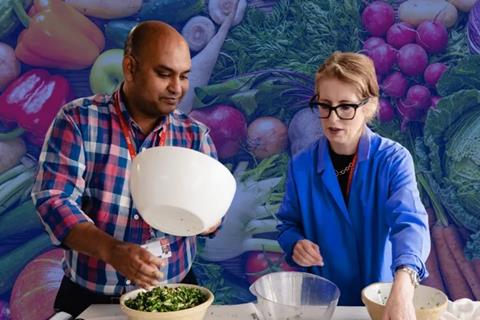
A new study from King’s College London has found that eating fresh produce scraps such as peels, skins, stalks and seeds could be a valuable source of dietary fibre, alongside having a positive impact on the environment.
Published in the International Journal of Food Sciences and Nutrition, experts from the Department of Nutritional Sciences and King’s Food analysed 12 types of fruit and veg commonly used in foodservice settings, including butternut squash, bell peppers, broccoli, kiwi fruit, pineapple and watermelon.
In 10 out of 12 cases, it found that ‘root-to-tip’ components, such as peels, skins and stalks, contained significantly higher levels of dietary fibre than the portions normally consumed.
However, despite the nutritional benefits, these elements are usually discarded by consumers.
It found that watermelon rind contained 2.10g of fibre per 100g, roughly equivalent to the fibre in a slice of wholemeal bread.
Butternut squash skin and seeds contained 9.25g per 100g, nearly as much as a bowl of bran flakes.
Pineapple skin and core was found to contain five times more fibre than the flesh (453.7 per cent). Eating just the skin and the core could provide as much fibre as eating five portions of the flesh alone, they found.
Dr Rachel Gibson, project lead and reader in Nutrition and Dietetics at King’s, said: “The variation in fibre content between the parts of the food we consume and that most throw away was striking.
“The ‘root-to-tip’ components in our study represented between 25 per cent and 48 per cent of the total weight of the produce. That means people are discarding a significant portion of the produce we buy. And these are parts of the plant that could help address our dietary fibre deficit.”
According to government data, only 4 per cent of UK adults meet the recommended minimum daily intake of 30g of dietary fibre, averaging just 16.4g per day.
At the same time, approximately 10mn tonnes of food is wasted annually, with fresh fruits and vegetables representing 36 per cent of this.
The study, which tested the ‘root-to-tip’ concept on a focus group of 40 of King’s staff and students, found a ‘mental discomfort’ barrier about eating these items, including concerns around digestibility. However, other influential factors also showed motivational potential among those involved in the study.
Georgia Browne, research assistant and lead author of the study, said: “Interestingly, participants viewed nutritional benefits – particularly fibre content – as a stronger motivator than environmental sustainability when considering whether to adopt ‘root-to-tip’ eating.”
Leaving skins on kiwi fruit, using broccoli stalks in stir-fries or incorporating bell pepper seeds into dishes could be a simple and easy opportunity for consumers to boost their daily dietary intake by using often-discarded food elements.
Dr Balazs Bajka, senior lecturer in Nutritional Sciences, who led the laboratory fibre testing in the study, said: “Importantly, this is not about encouraging people to eat ‘100g of butternut squash skin and seeds’ to increase fibre intake.
“Rather, by making better use of the often-overlooked parts of fruits and vegetables as part of everyday meals, we have an opportunity to increase dietary fibre intake in a simple and sustainable way.”