Legume residues in fields can benefit soil health and subsequent crop, but effect depend on variety and quantity returned to soil
Leaving pea and bean residues within fields after harvesting has varying impacts on soil health and following crops, according to a new study.
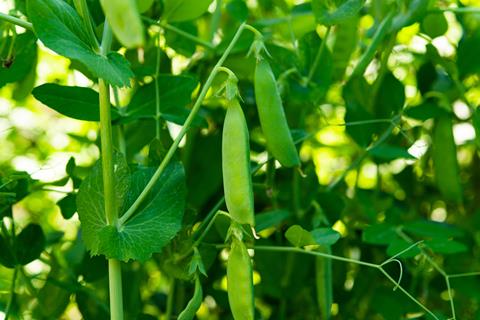
Researchers from The James Hutton Institute and the Universidade Católica Portuguesa examined different varieties of peas and field beans to understand the impact of leftover stems, leaves and roots.
The study found that moderate amounts of crop residues boosted soil microbial activity, improved nitrogen availability and supported barley growth at levels comparable to those achieved with synthetic nitrogen fertiliser.
However, larger amounts of residues produced the opposite effect, reducing microbial activity and nitrogen availability while slowing barley growth.
The findings highlight the potential benefits of returning crop residues to agricultural soils, while suggesting that the effects can vary considerably between crop varieties.
Professor Pietro Iannetta, co-author on the study, said: “Understanding genuinely regenerative cropping systems demands more detail regarding the chemical nature of crop residues, how much is returned, when it is returned and how it interacts with soil biology and the crop that follows.”
The research also points to the importance of crop phytochemical diversity, meaning the range of natural chemical compounds produced by different food crops and plant varieties, in shaping soil processes and influencing the performance of subsequent crops.
The findings could also have implications for plant breeding, suggesting that the contribution different varieties make to soil health and subsequent crop performance could become an additional consideration alongside established traits such as yield and disease resistance.
However, researchers acknowledged that the highest residue levels recorded in the study were considerably greater than those typically found on commercial farms, meaning lower residue levels are likely to be more relevant to practical agriculture.
The study was also conducted under controlled conditions and examined barley growth over the first eight weeks. Further research will be required to determine how these effects develop over several growing seasons.
The research also expressed interest in exploring how crop residues affect greenhouse gas emissions, soil carbon storage and long-term soil health.