NFU Cymru calls for package of SFI, water and SPS support from government, including ‘protein payment’ incentives
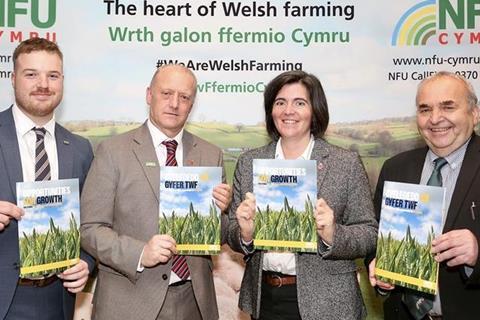
A new report from NFU Cymru has set out a positive vision for the future of Wales’ arable and horticulture sectors.
While both sectors currently account for just 6 per cent of Welsh farmland, the report has outlined its “enormous potential”.
Increased investment, innovation, trade, supply chain fairness and regulation will be key to this, it found.
The report, titled Opportunities for Growth: NFU Cymru Welsh Crops & Horticulture Report, was launched on 11 November in Cardiff Bay, by Tom Rees, NFU Cymru’s Crops and Horticulture board chair.
Abi Reader, NFU Cymru president and James Evans MS, chair of the Senedd’s Climate Change, Environment, Sustainability and Rural Affairs Committee, were also at the event, alongside members of the Sennedd, stakeholders and farmers from across the industry.
SFI, reservoir and protein crops among core asks
“Welsh arable and horticulture businesses are some of the most entrepreneurial, sustainable and ambitious in farming today,” Rees said.
Helping the sector fulfil its potential will rely on a set of changes, he continued.
Making the Sustainable Farming Incentive (SFI) more accessible was highlighted. “To do this the scheme needs to expand the range of options available to meet the habitat requirements of the SFS Universal Layer.”
The union has also called for a budget of £1bn for SFI27 it is to meet expected demand from farmers and fulfil the government’s targets.
“Urgent” reforms to water infrastructure planning and regulation to support on-farm reservoirs were another key recommendation. In July 2026, the entirety of Wales was officially declared in drought by Natural Resources Wales, but the country often experiences a higher average rainfall compared to much of the UK in the autumn and winter months.
Rees said: “Given the extremes of wet and dry weather seen in recent years, we need to better capture the plentiful rainfall that we have in Wales for much of the year to make use of at times of shortage.
“On-farm reservoirs bring the dual benefit of supporting food production whilst also promoting diverse ecosystems and environmental habitats.”
The report also called on the Welsh government to incentivise the production of more protein crops, such as peas, beans and lupins, via a dedicated ‘protein payment’ within the sustainable production layer of the SFS Optional Layer.
Various research studies have been conducted around the sustainable credentials of legume crops, including potential benefits to soil health and public health.
’Effective transition’ for SPS is key
The upcoming SPS agreement, slated to take effect in mid-2027, is also expected to have a “critical” impact on Welsh arable and horticulture producers.
However, Rees warned that a “cliff edge” alignment on plant protection products could cost both sectors “dearly”, urging for an effective transition period.
“While a reset of trading relations and subsequent reduction in red tape can facilitate improved trade with Wales’ biggest market, dynamic alignment as part of an SPS agreement must have an effective transition period,” he said.
A series of case studies cited in the report highlighted that transparency across supply chains would be critical to ensure producers receive fair returns for the risks and investments involved in producing food.
“This report demonstrates the enormous potential of Welsh arable and horticulture to further contribute to economic growth, strengthen food security and support rural communities in every corner of Wales,” Rees said.
Collaborating with the government on policy will be vital to helping that potential be realised, he added.