Domestic and export markets are responding to the increased supply
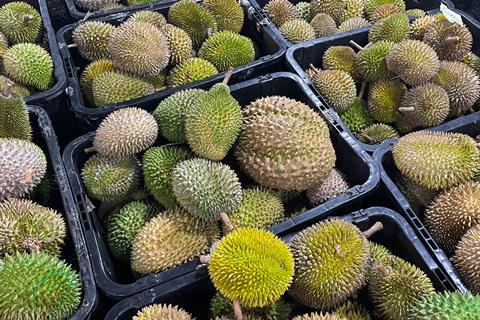
Malaysia has produced a large Musang King durian crop, which has flooded markets with fruit and driven prices down.
According to a report from The Straits Times, the bumper crop has been referred to as a “tsunami” by Malaysia’s growers, with farmgate prices diving as low as RM10 (US2.46) per kg, a far cry from the RM80 per kg seen as prices peaked a decade ago.
Sam Tan, president of the Malaysia Durian Exporters Association, told Sin Chew Daily, that the previous peaks may not be seen again and that price point of RM35 to RM40 per kg for Musang King is acceptable to both domestic and international consumers.
Tan said total planting area has expanded fivefold in recent years and the economic slowdown in China has dampened demand.
“The Chinese market is sluggish; consumers simply cannot accept prices of RM50 or higher. Our exports are priced according to market demand,” he said.
Expanded availability had also changed consumption habits, according to Tan.
“Now, it feels like durian production never stops; it stretches from June all the way to February or March the following year,” he said.
“When you see something every day, you lose the intense desire for it.”
Tan added that durian industry players are currently collaborating with the Ministry of Agriculture and Food Security to implement new measures aimed at stabilising prices for the next season.
According to a report from The Sun, quality issues have also resulted in export product redirected back to the domestic market. The Federal Agricultural Marketing Authority (Fama) deputy director-general (Food Security and Operations) Faisal Iswardi Ismail said younger orchards are producing lower quality fruit that does not meet export requirements for key markets such as China and Singapore.
“The drop in clone durian prices to RM15–RM20 per kg has affected village durian prices nationwide,” Ismail said after launching the Agro Madani Seasonal Fruit and Durian Sales Programme.
To assist growers, Fama said it will purchase affected village durians and process them into paste and pulp at specialised centres.