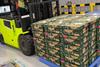
Air India Cargo ships  guavas to the UAE as airport commences international cargo operations 

Image: Air India

Navi Mumbai International Airport has celebrated the departure of its first international cargo shipment as Air India Express flight IX207 departed for the UAE, loaded with fresh guavas on 15 July.

The 1.79-tonne consignment marked the opening of a new channel for exporters in western India; the Navi Mumbai-Abu Dhabi route offers approximately 2.5 tonnes of belly-hold cargo capacity, creating a valuable channel for the movement of perishables and time-sensitive goods.

Air India Cargo expects the service to carry around 25 tonnes of cargo each month, helping meet growing demand for fresh Indian produce in the UAE and the wider Gulf region. Air India Express currently operates thrice weekly on the route, providing regular connectivity for exporters seeking faster access to the market.

“Every new route presents an opportunity,” said Ramesh Mamidala, head of cargo, Air India. “This first export shipment from Navi Mumbai connects growers, traders and businesses in western India directly with one of the region’s most important international markets. Fresh produce is highly time-sensitive, and reliable air connectivity plays a critical role in helping Indian exporters reach global consumers while preserving product quality.”

The inaugural consignment was dominated by guava from the Konkan belt, a region renowned for its fertile terrain and fruit cultivation. Also on board was Drumstick Moringa, a product increasingly sought after in international markets for its nutritional value and growing popularity among health-conscious consumers.

The inaugural shipment was supported by a sophisticated cold-chain network designed to ensure that delicate produce arrives overseas in the same condition in which it was harvested.

Over the past several years, Air India Cargo has steadily strengthened its capabilities to support the growing movement of perishables, pharmaceuticals and other temperature-sensitive commodities across its network.

Its cargo operations are supported by specialised equipment, including cool dollies and thermal blankets, designed to minimise temperature fluctuations while shipments move between warehouse and aircraft. The facilities supporting these operations are GDP-certified, aligning with globally recognised standards for the safe, secure and quality-assured handling of temperature-sensitive cargo.

“Cargo is often the unseen enabler of trade,” said Mamidala. “When we transport perishable products such as fruits, vegetables or temperature-sensitive pharmaceuticals, speed alone is not enough. Maintaining the integrity of the shipment from origin to destination is equally important. Investments in cold-chain infrastructure and globally certified handling processes are helping us support exporters with the reliability they need.”

For growers and exporters across Maharashtra, reliable air cargo links can make the difference between accessing local markets and reaching international consumers willing to pay a premium for fresh produce. 

“The Gulf has long been a strong market for Indian produce,” Mamidala said. “By making additional capacity available from Navi Mumbai, we are creating faster and more efficient pathways for exporters while strengthening India’s agricultural export ecosystem. Every shipment represents the efforts of farmers, traders, freight forwarders and logistics partners, and our role is to connect them to opportunities beyond India’s borders.”