Vertically integrated operations help AVI Global Plast meet changing needs of fresh produce industry and its customers.
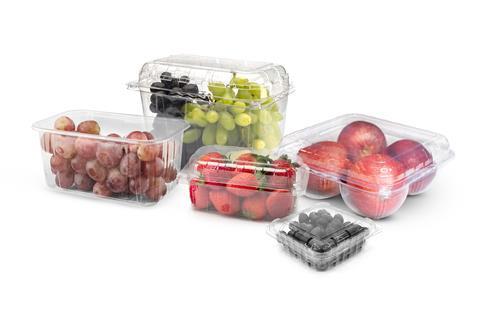
India is playing a growing role in supplying packaging for global fruit exports, a role AVI Global Plast is contributing to with its vertically integrated facility in Daman in western India.
The company manufactures recycled PET punnets at its Daman facility which integrates PET sheet extrusion, tooling development and thermoforming within a single operation. According to managing director Sukhdeep Sethi, this enables AVI Global Plast to manage production timelines and costs while supplying exporters, growers and distributors across 33 countries and six continents.
The facility spans approximately 300,000ft2 and produces around 24,000 tonnes of PET sheet annually, supporting a wide range of thermoformed packaging formats designed for international produce supply chains. AVI Global Plast supplies packaging for categories including berries, grapes, cherry tomatoes, kiwifruit, apples and avocados.
As the global fresh fruit export trade expands, packaging requirements are becoming increasingly diverse. Exporters often supply fruit to several markets simultaneously, each with its own retail standards and preferred pack sizes.
Sethi says packaging suppliers need the flexibility to adapt formats to different retail environments.
“Exporters rarely supply just one market anymore,” he says. “Different regions work with different retail pack sizes, so packaging suppliers must be able to support multiple formats.”
These differences are visible across major retail markets. In the US and Canada, grapes are commonly sold in clamshell containers of 1lb, 2lb 8oz, 2lb 10oz and 3lb, while European retailers typically favour smaller formats such as 250g, 500g and 1kg packs, says Sethi.
Berries follow a similar pattern. European retailers commonly use 125g punnets, while one-pint packs dominate in North America and larger formats are often used in parts of Latin America.
Packaging manufacturers are expanding their product portfolios in response to these differences in retail specifications.
Alongside its standard range, AVI Global Plast’s vertically integrated structure and in-house design, mould and tooling capabilities have enabled the development of several first-to-market produce packaging formats in India.
These include single-piece avocado punnets, two-piece avocado packs and three-fruit kiwifruit punnets, designed to stabilise fruit during transport while maintaining freshness and enhancing shelf presentation.
Material selection in fresh produce packaging is also evolving as export markets place greater emphasis on recycled content. Across several regions, retailers and regulators are introducing measures that encourage the use of recycled materials, including plastic packaging taxes and recycled-content targets.
India’s established PET recycling ecosystem provides a steady supply of recycled flakes, allowing manufacturers to produce recycled PET packaging at scale for global supply chains.
AVI Global Plast manufactures mono-material produce punnets using up to 100 per cent recycled PET. Sethi says it was also the first company in India to install the technology to process food-grade recycled PET sheet for thermoformed containers.
This combination of recycled materials, integrated manufacturing and specialised packaging formats allows exporters to meet evolving regulatory expectations while maintaining the clarity, strength and performance required for fresh produce distribution.
“Fresh produce passes through many stages before reaching the retail shelf,” says Sethi. “Packaging must perform reliably throughout that journey.”