Government prepares tools to help growers transition to new fruits as climate changes
Korea’s Rural Development Administration has developed a new system to help growers understand energy requirements as production of subtropical crops increases in response to climate change.
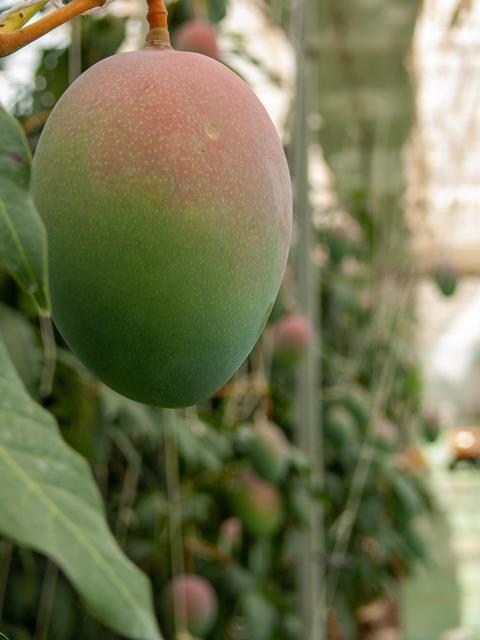
According to a report from The Asia Business Daily, the tool informs growers of the scale of heating energy required to grow fruits such as mango, passionfruit, papaya, dragon fruit, and mandarins in different regions of Korea.
As of 2025, the domestic cultivation area for subtropical fruits reaches 1,198ha, accounting for 41.2 per cent of all subtropical crops. However, subtropical fruits are vulnerable to cold, they often require protected cultivation facilities and heating during winter.
Kim Daehyun, Director General of the National Institute of Horticultural and Herbal Science at the Rural Development Administration, said: “The scale of heating energy required varies greatly depending on the local climate”.
“Therefore, as subtropical fruit cultivation expands, it becomes increasingly important to identify and systematically manage heating energy usage by region in advance,” he added.
This system is designed to compare current and future heating energy demand (kerosene and electricity). Growers can estimate heating requirements at a specific site on a plot-by-plot basis before planting, allowing more informed decisions. They can also predict the levels of carbon dioxide emissions associated with energy use.
“In a situation where subtropical fruit cultivation is rapidly expanding due to climate change, the heating energy demand prediction system will serve as a key foundation for reducing management uncertainty for farmers and enabling scientific management of energy use,” Kim said.
“Since energy savings directly lead to greenhouse gas reduction, we will continue to refine crop-specific cultivation indicators that reflect climate change scenarios so that we can achieve both carbon neutrality and the sustainability of agriculture.”