Imports of bananas, pineapples and mangoes to be tariff-free from 12 February to 30 June
Korea’s Ministry of Economy and Finance has announced that it is reopening tariff exemptions for certain imported fruits as part of its 2026 Lunar New Year price stabilisation package for consumers.
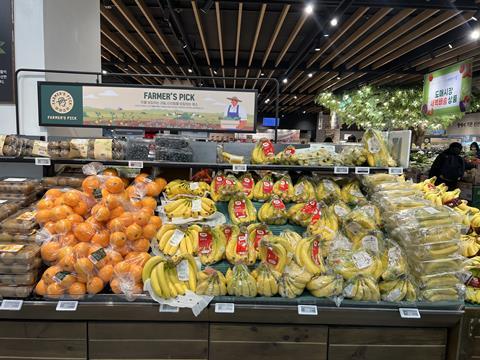
Between 12 February and 30 June, imports of bananas, pineapples and mangoes will be tariff-free, where currently they face duties of 30 per cent.
The move – announced today (28 January) – follows recent emergency measures, including the government’s decision to import 2.24m US eggs to ease domestic food price pressures, according to Korean fresh fruit business specialist and market analyst Hyojun Kim.
“This suggests the tariff relief on imported fruits is part of a broader price stabilisation strategy rather than an isolated decision,” said Kim.
The Korean government first introduced near tariff-free imports for a wide range of fruit categories in 2024 after disruptions to domestic supply of apples and pears. The emergency exemptions were initially introduced to stabilise prices and later expanded without volume limits.
Following the presidential election and a change in administration, the exemption programme was fully withdrawn in July 2025. But the government has now reinstated the policy, albeit on a smaller scale, amid domestic supply shortages and rising prices.
A prolonged cold snap in Korea, which has seen wind chills drop to -20°C, has disrupted supply chains and driven up prices of agricultural products over the past month, according to local media reports. Fruit and vegetable crops vulnerable to low temperatures are seeing higher producer prices, with the risk of these being passed on to consumers.
Kim said the return of the tariff exemptions is likely to have less impact on consumer prices this time, due in part to the weakness of the Korean won.
“While the temporary easing of tariffs may offer some relief to importers facing the dual pressure of higher tariffs and a weaker Korean won, the consumer-level impact is unlikely to mirror the effects seen during the previous exemption period. Exchange rates are no longer where they were,” he said.
“Should exchange rates remain elevated, there is a meaningful possibility this measure could be extended toward year-end.”