Producers and technology providers meet to explore how year-round production might be achieved
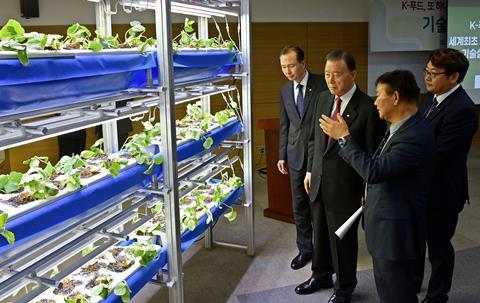
The Korea Agro-Fisheries & Food Trade Corp (aT) has hosted a technology briefing for the country’s strawberry industry at its headquarters in Seoul as it responds to climate change and lays the foundation for expanding strawberry distribution and exports.
In 2024, Korea produced approximately 155,000 tonnes of strawberries, with the majority produced and consumed in the winter months. However, as the industry navigates the increasing impact of climate change, including abnormal high temperatures and rainfall, it is seeking to establish a more stable product base.
The aT briefing was organised to explore the feasibility of year-round strawberry production in response to these changes and to discuss how to utilise production technologies linked to expanding exports during the summer off-season.
Attendees hear from technology providers showcasing environment-controlling agricultural systems and modular indoor smart farms capable of delivering year-round production.
In addition to delivering more fruit to the domestic market, expanding supply windows will help fuel Korea’s growing strawberry exports. As of the end of April 2026, Korean strawberry exports reached US$56.87mn, a 16.6 per cent increase compared to the same period of the previous year. In 2025, total exports reached US$72mn, with major export destinations being Thailand (US$19.7mn), Singapore (US$19.5mn), Hong Kong (US$10mn), and Vietnam (US$7.5mn).
“Strawberries are a high-value-added item that demonstrates the potential of K-Food and contributes to increasing farm income,” said aT president Hong Moon-pyo.
“Taking this briefing session as an opportunity, we will gradually examine the feasibility of year-round strawberry production and strive to ensure the stable production of fresh agricultural products and strengthen export competitiveness even amidst climate change.”