Philippines currently incur an 8 per cent tariff on banana exports to Japan between October and March and 18 per cent from April to September
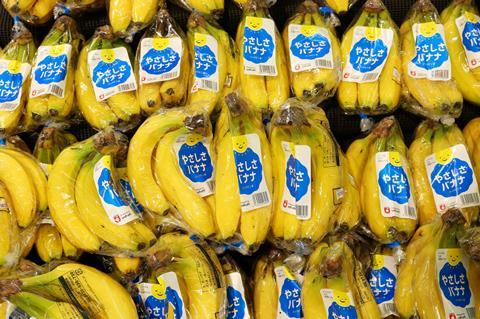
The Philippines government has requested lower tariffs on banana exports to Japan, according to a report by Manila Bulletin.
Agriculture secretary Francisco Tiu Laurel told the publication he had appealed the country’s request to amend the Japan-Philippines Economic Partnership Agreement (JPEPA) for a third time, requesting a reduction in duties to between 5 and 8 per cent.
Philippine banana exports to Japan currently incur an 8 per cent tariff between October and March, and a higher duty of 18 per cent from April to September.
While Japan remains the largest market for Philippine bananas, accounting for around 75 per cent of total exports, it has lost dominance in the market as other countries with lower tariffs have gained momentum.
“We reiterated our request that our bananas be granted a lower tariff,” Tiu Laurel said in an interview. “This is because other countries, such as Vietnam, Thailand, and Mexico, are already moving toward zero tariffs.”
According to Manila Bulletin, the Philippine government has long pushed for amendments to JPEPA.
This last request comes as the country hopes to acquire zero duties through its potential membership in the Comprehensive and Progressive Agreement for Trans-Pacific Partnership (CPTPP) later this year.
CPTPP members experience a reduction in trade barriers including zero tariffs on a wide range of goods, consistent standards, and improved investment facilitation.
Tiu Laurel told Manila Bulletin Japan has agreed to support the Philippines’ bid to join CPTPP. He added that it would take roughly two years before the country could officially become a member. However, the government in the meantime would aim to fulfil all CPTPP requirements before the attainment process formally begins.
Under these requirements, the Department of Agriculture (DA) is working to comply with the provisions of the International Union for the Protection of New Varieties of Plants (UPOV).
“So we have to follow certain conditions that all CPTPP members also comply with,” Tiu Laurel said.
CPTPP is composed of Australia, Brunei, Canada, Chile, Japan, Malaysia, Mexico, New Zealand, Peru, Singapore, Vietnam, and the UK.