Redirected vessels from China divert to ports in Oman and Saudi Arabia, as others are held in Asia
Conflict in the Middle East has disrupted regional shipping, significantly affecting Dubai’s fresh produce market, a critical sector in the Gulf’s major trade hub, which is highly dependent on imports. Industry experts report local businesses are actively seeking alternative logistics solutions to maintain stable supply amid ongoing delays.
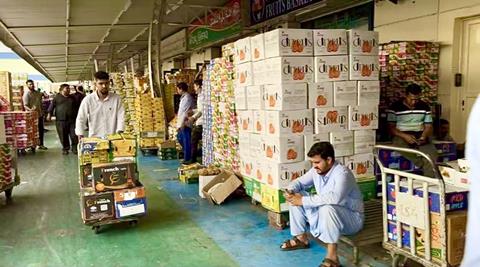
Dubai’s fresh produce supply is primarily reliant on sea imports, with the Al Aweer Central Fruit & Vegetable Market serving as a key trade hub. In response to the escalating situation, several international shipping companies have temporarily adjusted their Middle East routes. Some have suspended new bookings, while vessels already in transit are being rerouted or redirected to alternative ports.
As of 11 March, some vessels carrying Chinese fresh produce have begun diverting to nearby ports to access the Middle East market. For example, certain shipments are being offloaded at the Port of Khalifa, then transported by land to Dubai, while others are transshipping through ports such as Sohar and Salalah in Oman, and Jeddah in Saudi Arabia. Some containers are temporarily held at ports in South and South-East Asia, awaiting further coordination.
Meggie Peng, chief representative for the Middle East at Onedayone Dubai, said that supply chain companies are closely monitoring the latest updates from ports and shipping companies to adjust logistics plans accordingly.
“In this situation, the final port of unloading is typically determined only in the final stage, creating high demands on ground logistics,” she said. “Particularly at ports with limited refrigerated plug-in capacity, handling capacity is constrained. Continuous monitoring of port and container statuses is essential to develop the most appropriate transportation plan promptly.”
In addition to route changes, companies are facing rising transportation costs. Shipping delays, port congestion, and cross-border land transshipment have increased the risk of damage to fresh produce. Furthermore, war surcharges, port transfer fees, and escalating land transport and customs clearance costs have driven up logistics expenses. Industry insiders estimate that overall logistics costs per container have increased by approximately AED20,000 (US$ 5445.88).
While some shipments are finding alternative transportation routes, experts point out that relying solely on these shipments will not be sufficient to ease the inventory pressure in the market. A stable supply still requires consistent shipments from the origin. However, shipping capacity remains tight, with limited number of shipping companies in China accepting Middle East bookings. Freight rates have risen considerably, and many routes are currently only accepting cargo for nearby ports, temporarily unable to offer direct service to Dubai.
As uncertainty persists, some fresh produce suppliers have begun adapting their shipping strategies. They are prioritising more durable products, like ginger, garlic, apples, and carrots, to mitigate transportation risks and ensure a stable supply to local markets.
Regardless of how the conflict concludes, logistics and transportation are expected to recover gradually over time. However, the long-term effects on Dubai’s fresh produce supply chain will be significant and require careful assessment. This crisis also highlights the critical need for a more flexible and diversified supply chain system, especially for businesses heavily reliant on imports, to ensure supply chain stability in the future.


