US agriculture exports to Vietnam have surged in the past two years and improved access creates new openings for the fruit trade
Expanded market access could pave the way for increased US fresh produce exports to Vietnam, according to a new report from the USDA.
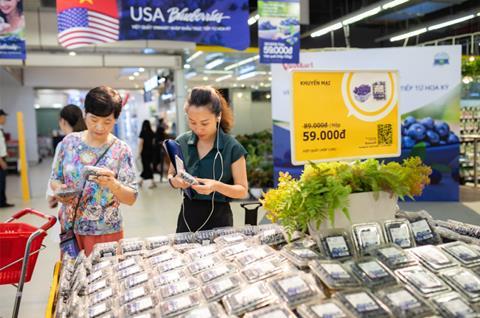
The report noted that the US is the second-largest supplier of agricultural products to Vietnam, at US$4.7 billion in 2025, a significant increase from the less than US$3.5bn shipped in 2024.
Fresh fruit exports were highlighted as one of the largest areas for growth given recent US-Vietnamese reciprocal trade negotiations and improved market access for US suppliers.
The US exported US$91.1mn of fresh fruit in 2025, including apples (US$47.1mn), cherries (US$19.6mn), grapes (US$17.6mn), and other fresh fruits (US$1.7mn). The US is the second largest supplier of fresh fruit to Vietnam
One category not mentioned was citrus, which recently saw a breakthrough. On 16 March, 2026, Vietnam granted market access for US mandarins from California and Florida. Experts estimate the potential value of US mandarin exports to Vietnam at US$5mn the report said.
Stonefruit is another category that recently gained improved market access.
“On 6 June, 2025, the Plant Production and Protection Department (PPPD) of Vietnam granted approval for the export of fresh peaches and nectarines from California,” the report noted.
“This decision follows negotiations between USDA’s Animal and Plant Health Inspection Service and PPPD, confirming that the systems approach utilized by American stonefruit producers is both safe and effective. Experts estimate the annual market value for California peaches and nectarines to be US$2.5mn.”
Another factor contributing to the opportunity in Vietnam is the country’s improving macroeconomic profile as the fourth-largest economy in the Association of South-East Asian Nations (ASEAN), with expanding incomes and industrial processing growth supporting demand for imported products.
“US agricultural exports to Vietnam are a significant and growing segment of bilateral trade, supported by both market demand and recent trade agreements. A growing middle class, with modern retail and food processing sectors, drives demand for US agricultural goods. Vietnamese consumers increasingly value US products for their quality and safety,” the report said.