A new international research initiative aims to speed up the delivery of improved potato varieties to farmers facing climate and pest and disease pressure
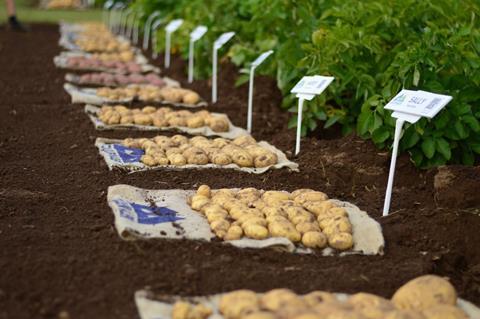
A new global partnership dubbed Genetic Acceleration through Artificial Intelligence for Root and Tuber Crops (GAIN-RT) aims to accelerate innovation in potatoes and sweet potatoes from laboratory to farm.
The partnership combines world-leading expertise in crop breeding, AI, gene editing and field-based research, with partners including the National Potato Innovation Centre (NPIC), which is hosted by The James Hutton Institute, the International Potato Centre (CIP) and key African partners, the Kenya Agricultural and Livestock Research Organisation (KALRO) and Egerton University.
“Climate change, evolving pests and emerging diseases are advancing faster than conventional crop breeding can keep up,” NPIC warned. “This growing gap threatens farmer livelihoods, food security and nutrition, especially in vulnerable regions such as sub-Saharan Africa.”
GAIN-RT is working to close that gap using advanced AI models to “predict which crop varieties will perform best under climate stress, identify stronger, more durable disease resistance and improve breeding efficiency while reducing development timelines”.
Professor Ingo Hein, principal investigator at The James Hutton Institute and deputy director of the National Potato Innovation Centre, commented: “This collaboration harnesses the potential of AI and emerging technologies including gene editing to help accelerate the development of more resilient potatoes and other strategically important crops, supporting a more sustainable future and strengthening food security.”
“Breeding has traditionally taken many years to deliver improved varieties,” added CIP director general Simon Heck. “But climate change and pests do not wait. They evolve rapidly. Artificial intelligence gives us the tools to catch up, helping breeders identify better varieties faster and reduce the risks farmers face.”
Building on the success of the first phase, sweet potatoes and other crops are reportedly set to follow.
“Beyond technology, the initiative will invest in training scientists, particularly women and early-career researchers, in AI-driven breeding and gene editing,” NCIP added. “This will help ensure that innovation capacity is built locally and sustained over time, strengthening national research systems and enabling long-term impact.”