Leading nutrition scientist calls for collaboration in UK food and drink sector to create system that prioritises health and nutrition but remains affordable
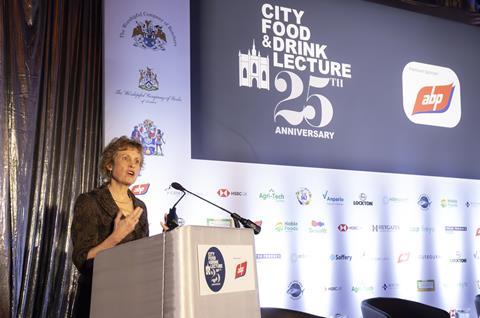
Insights shared at the 25th City Food and Drink Lecture underscored the urgent need to tackle obesity and overweight, which continue to pose serious health, social, and economic challenges in the UK.
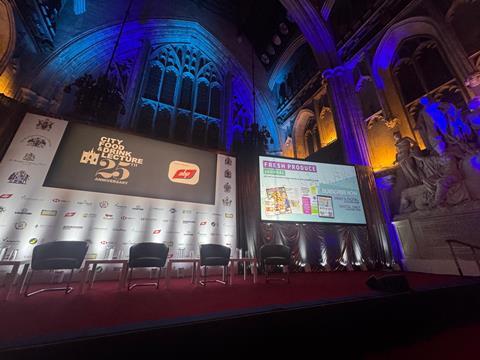
In her keynote speech to an audience of around 650 at Guildhall in London, nutrition scientist Professor Susan Jebb OBE highlighted alarming obesity trends and stressed the importance of collective responsibility and action.
From consumers to big food companies, Jebb, a professor of diet and population health at the University of Oxford, discussed how the food sector must change to help make the next 25 years healthier than the last.
Speaking at the event, Professor Jebb explained that more than one billion people globally are living with obesity, a number that continues to rise rapidly. In the UK, 28 per cent of adults are classified as obese, with a further 40 per cent considered overweight.
Also concerning is that by the time children start school, 10 per cent are already overweight, a figure that doubles by the time they finish school. Overweight and obesity disproportionately affect children in more deprived areas, leading to poorer long-term health.
Obesity also imposes a heavy economic burden, costing the NHS nearly £10bn annually, and £24bn a year in productivity losses.
While Professor Jebb stressed that action on obesity had fallen well short of previous targets for improvement, she emphasised that progress is achievable.
Drawing on the UK’s success in reducing smoking rates, from half of adults 50 years ago to just 12 per cent today, she outlined how similar coordinated strategies could drive meaningful change in tackling obesity – improving obesity treatment, shifting the food system towards healthier foods, and building a healthier food culture.
Professor Jebb also highlighted some growing trends, including how rising consumer concern over ultra-processed foods and the growing use of GLP-1 weight loss medicines are reshaping consumer demands for food.
Survey data from the Food Standards Agency shows that 79 per cent of people are concerned about ultra-processed foods and almost half report actively changing their eating habits away from processed foods.
In addition, Professor Jebb pointed out that already around two million people in the UK are using GLP-1s and this is set to increase. Each of these factors is creating both disruption and opportunity for the industry.
She told the audience: “This is a moment of opportunity for change – we can be the generation that takes the next step.”

If businesses are to successfully respond to this changing environment it will require a combination of approaches: more nutritious ingredients, moving away from reliance on HFSS products, and supporting people to develop new food skills and healthier eating habits.
Together with grassroots initiatives, which are boosting food literacy, this could foster meaningful societal change, Professor Jebb argued.
Addressing the obesity crisis, she emphasised that the food industry must take a lead in driving change. Producers, manufacturers, and retailers have a responsibility to transform the products they make and how they make them, to deliver a food system that prioritises health and nutrition but remains convenient and affordable. “Healthy eating cannot become an expensive hobby,” she said.
Such a reset could transform health over the next 25 years, creating environments where healthier choices are easier for everyone, and food becomes a force for good.
Professor Jebb is one of the UK’s most influential nutrition scientists. She was awarded an OBE in 2008 for services to public health and is a fellow of the Academy of Medical Sciences. She is widely recognised as one of the most authoritative voices in UK food and health policy.