USDA predicts slowing growth for 2026/27 as imports continue multi-year downward trend
The world’s largest fresh pear exporter, China, is expected to continue growing its outbound shipments this season – though on a smaller scale, according to a recent report by the USDA.
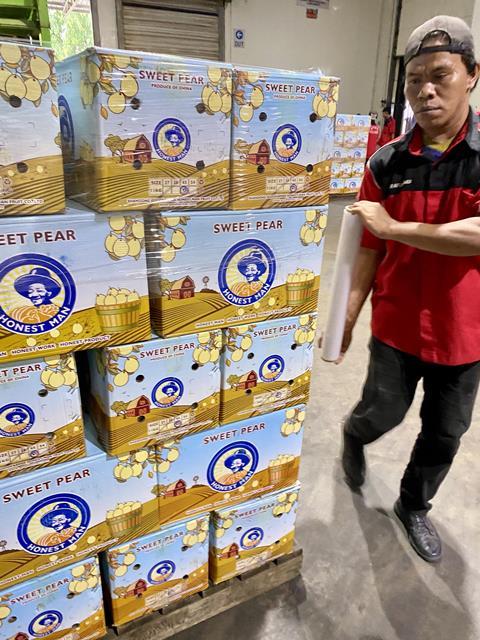
While production in MY 2026/27 (July–June) is projected at 22mn tonnes, up nearly 3 per cent on 2025/26, it remains to be seen how new import quotas from the country’s largest export destination, Indonesia, will affect final numbers.
Pears had previously escaped the quota regulations commonly applied to imported fresh produce, but new import requirements for the product were implemented on 8 May 2026.
“Indonesia’s regulatory landscape continually evolves to ensure market balance, quality assurance, and orderly trade governance,” Agus Ang, director of importer-distributor Indofresh told Asiafruit in September. “The integration of revised import procedures naturally brings an adjustment period for the entire industry.”
Other South-East Asian markets including Vietnam, Thailand, and Malaysia will continue to be strong destinations for Chinese pears, the USDA said, supported by long-standing trade relationships and strong demand for sweet Asian pear varieties.
Central Asian countries, such as Kyrgyzstan, and markets in the Middle East will also remain important traditional destinations. While Russia has emerged as a key growth market for China’s more acidic Ya pears.
Conversely, imports are expected to continue their multi-year downward trend in 2026/27 as overall demand for pears remains soft.
Chinese consumers strongly favour crispy Asian-style pears over softer Western pear varieties with core purchasing drivers including high Brix level, abundant juice, thin skin, fine texture, moderate fruit size, and minimal stones.
The USDA is predicting consumption to reach 21.19mn tonnes in 2026/27, up slightly on 2025/26 which reached 20.63mn tonnes. According to the report, slowing economic growth and cautious household spending have dampened demand for expensive, non-essential fruit, which could see consumers return to the pear category as a more affordable option.
Northern China currently accounts for roughly 60 per cent of China’s pear consumption, though the USDA said southern markets, including Guangdong, Guangxi, and Sichuan are expanding rapidly via direct-from-farm e-commerce, community group-buying, and live-stream channels.