Shipments to Europe, Hong Kong and Canada reflect efforts to diversify Philippine agricultural exports beyond traditional markets
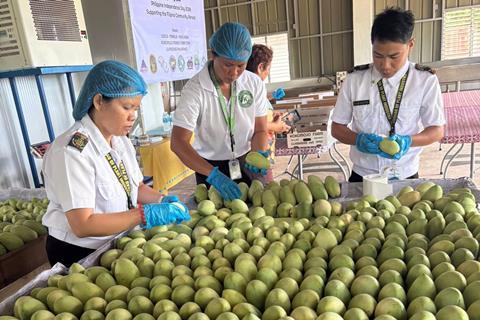
The Philippines has stepped up efforts to expand the global reach of its Guimaras mangoes, with export shipments to Europe, Hong Kong and Canada highlighting growing ambitions to penetrate premium overseas markets and create more income opportunities for Filipino farmers.
On 3 June, the Philippines sent its first commercial shipment of mangoes to Canada.
Trade Secretary Cristina Roque said the 400-carton shipment demonstrated the growing competitiveness of Philippine agricultural exports and highlighted the success of government and industry efforts to expand market access abroad.
“This shipment shows that our exporters can successfully compete in high-potential destinations,” Roque said, describing Canada as a promising market for premium Philippine products.
On 9 June, some 200kg of fresh mangoes from Kokomojo Mango Farm in Sibunag, Guimaras were exported, with 50kg bound for the Netherlands, 50kg for Belgium, and 100kg for Hong Kong.
The Belgium and Netherlands consignments are intended as promotional exports aimed at introducing Guimaras mangoes to prospective buyers and industry stakeholders in Europe. Brussels will serve as the European port of entry.
The Hong Kong shipment will be distributed to diplomats and distinguished guests during celebrations marking the 127th Philippine Independence Day, providing another platform to showcase one of the country’s most recognizable agricultural products.
The export initiative was supported by the Bureau of Plant Industry (BPI), which provided technical, laboratory, and regulatory services to ensure compliance with international food safety and plant health requirements.
The BPI’s Guimaras National Crop Research, Development and Production Support Center assisted growers in implementing production technologies and good agricultural practices, while the Plant Product Safety Services Division conducted maximum residue limit testing to verify compliance with pesticide standards imposed by importing countries.
The National Plant Quarantine Services Division facilitated export permits and phytosanitary certification, a key requirement for market access and proof that the shipment is free from regulated quarantine pests.
The mangoes were sourced from PhilGAP-certified Kokomojo Mango Farm, which highlighted the growing role of farm-level certification in securing access to high-value export destinations.
Agriculture secretary Francisco P Tiu Laurel Jr said the government is intensifying efforts to open new markets for Philippine agricultural products, arguing that export expansion is critical to raising farmer incomes and generating jobs throughout the agricultural value chain.
“Every new export market we open creates opportunities not only for our farmers but also for workers involved in processing, logistics, packaging, and distribution. Expanding market access allows our producers to secure better prices, increase incomes, and invest in improving productivity, helping drive inclusive growth in rural communities,” Tiu Laurel said.
The shipment also reflected a broader push to diversify Philippine agricultural exports beyond traditional markets. By leveraging science-based regulation, quality assurance, and traceability systems, the government is seeking to position Philippine fruits more competitively in premium international segments where consumers are willing to pay higher prices for quality and food safety.
BPI said the export demonstrates increasing international recognition of Philippine produce and underscores the importance of collaboration among farmers, exporters, and government agencies in opening new market opportunities for local agriculture.