Group reports higher net sales for January-September, but sees operating earnings and net profit fall as costs rise
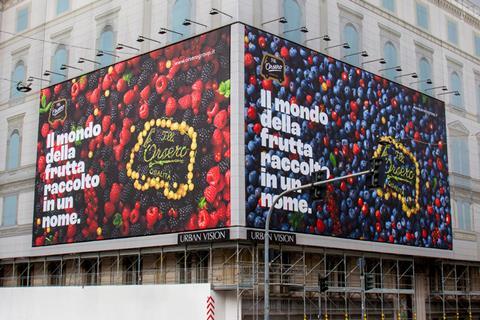
Italian fresh produce group Orsero has confirmed its full-year guidance for 2026 after net sales rose 2.1 per cent in the first nine months, although higher costs and weaker performance in several fruit categories reportedly pushed down its net profit and its adjusted earnings before interest, taxes, depreciation and amortisation (Ebitda).
Net sales for the period reached €1.3bn (US$1.46bn) in the nine months to 30 September, compared with €1.28bn (US$1.43bn) a year earlier, Orsero said in a press release.
Adjusted Ebitda fell 14.1 per cent to €64.1mn (US$71.8mn), with the margin narrowing to 4.9 per cent from 5.8 per cent. Net profit dropped 33.2 per cent to €21mn (US$23.5mn), while adjusted net profit declined 20.8 per cent to €26.1mn (US$29.2mn).
The company attributed the weaker profit margin to its performance in bananas, pineapples and citrus, as well as to higher energy and warehouse costs and increased general and administrative expenses. Labour costs also rose following new hires and salary adjustments, it said.
Orsero’s Distribution business generated sales of €1.238bn (US$1.39bn) during the period, up 1.8 per cent and supported by berries, kiwifruit, and exotic fruit.
Adjusted Ebitda for the division fell to €51.6mn (US$57.8mn) from €60.2mn (US$67.4mn). Shipping sales increased 3.8 per cent to €89.9mn (US$100.7mn), while adjusted Ebitda declined to €19.8mn (US$22.2mn).
Net financial debt increased to €146.4mn (US$164mn) at September 30 from €116.1mn (US$130mn) at the end of 2025, mainly reflecting the €38.2mn (US$42.8mn) acquisition of a 45 per cent stake in US-based Trucco Holdings. Operating cash generation during the period was €42.1mn (US$47.2mn).
In conclusion, Orsero maintained its full-year guidance for net sales of between €1.70bn and €1.74bn (US$1.90bn-US$1.95bn), for adjusted Ebitda of €78mn-€83mn (US$87.4mn-US$93mn), and adjusted net profit of €25mn-€29mn (US$28mn-US$32.5mn).
Raffaella Orsero, vice-president and chief executive officer, and Matteo Colombini, chief executive officer, said higher energy, logistics and warehouse costs and the Middle East crisis had created a challenging environment, while growth in berries, kiwifruit and exotic fruit helped offset pressure elsewhere.
The group has also launched a project to use artificial intelligence tools to optimise processes and improve cost efficiency, it added.