The signing of a formal phytosanitary protocol in Beijing opens the door for South African cherry exporters to tap into China’s US$3.3bn import market
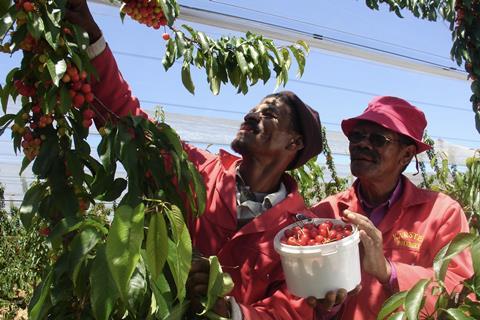
Leading South African exporter Tru-Cape has welcomed the announcement of formal access to the Chinese market for the country’s cherries.
Discussions between Chinese and South African negotiators have been described as a “landmark event” for the cherry industry.
“South African cherry producers have gained access to one of the world’s largest cherry markets, opening a new opportunity for the industry to build exports and establish a presence among Chinese consumers,” Tru-Cape stated.
The protocol was signed by South Africa’s minister of agriculture, Wille Aucamp, and Sun Meijun of the General Administration of Chinese Customs (GACC) in Beijing on 8 September 2026 during the 9th Sanitary and Phytosanitary Ministerial Meeting.
“The opening of the market is particularly significant given the scale of Chinese demand,” Tru-Cape noted.
”China imported approximately 586,900 tonnes of cherries in 2025, valued at US$3.3bn, making it the world’s largest cherry import market.”
Compared to this, South Africa only exported around 230,000 cartons of cherries during last season.
South Africa’s Department of Agriculture said it expects new access to stimulate further investment in cherry production and create about 600 jobs.
“We welcome this development wholeheartedly because it creates another market opportunity for South African cherries,” said Roelf Pienaar, managing director of Tru-Cape Fruit Marketing.
“There is clearly strong demand for cherries in China, and the market presents an exciting opportunity for South African growers, particularly because our season gives us the potential to supply fruit early, before Chilean volumes reach the market in significant quantities.”
Exporters said that where they have already established trade relations with Chinese trade partners for other South African fruits already shipped to China, it is easy to include new categories.
“It strengthens our trade package,” Engon Fruit’s CEO Altus Prins confirmed.
Tru-Cape said the biggest immediate challenge for exporters is likely to be fruit size.
Chinese consumers have a strong preference for larger cherries, with fruit of 28mm and above commanding particular interest, noted Johan Brink, sales director at Tru-Cape.
“However, size will not be the only consideration for Tru-Cape,” he noted.
“South African cherries have an important advantage in eating quality, and the company believes this can help create a point of differentiation as it enters the Chinese market.”
South Africa still have a fledgling cherry industry, with a local market-dominated sales strategy. As production grows, growers have said exports will increase.
At present South Africa does not rate amongst the top ten cherry exporters in the world, but has favourable marketing windows which would stimulate future exports.