Taiwan has solidified its position as a major cherry importer, but Kingo Group says consistent quality and steady arrivals are essential to drive further growth
As global suppliers continue to diversify their export strategies beyond mainland China, Taiwan has emerged as a crucial export market. According to Rabobank’s Global Fresh Sweet Cherry Update 2026 report published in March, Taiwan overtook Korea in 2025 to become the world’s second-largest importer of sweet cherries, behind only mainland China.
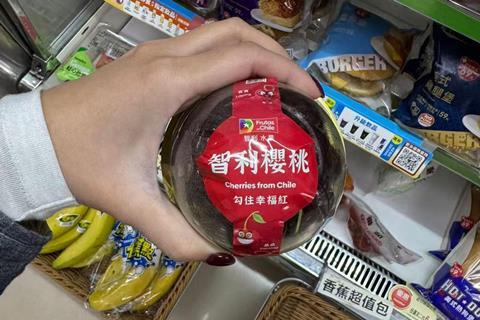
“A significant portion of Taiwan’s cherry demand is driven by gifting and household consumption during the festive season. The Chilean season is perfectly timed for the Lunar New Year window,” says Catherine Liu, head of business development at Kingo Group, a leading fruit importer and distributor in Taiwan.
“Historically, however, Taiwan was not a primary destination for Chilean cherries. As import volumes and product choices expanded in recent years, Taiwanese shoppers have developed a deeper understanding of the category as a whole.”
Taiwan saw a significant surge in import volumes last season. While wholesale markets absorbed a substantial portion, all major sales channels actively promoted the products. Kingo sees opportunities in the fierce competition among these channels this season.
“As each channel strives for differentiation, their demands for specific sizing and packaging formats have become increasingly varied,” Liu points out. “Compared to mainland China, demand is far more diverse here. Beyond the premium large fruit traditionally reserved for gifting, supermarkets and hypermarkets also require a variety of other sizes to cater to everyday consumption at more accessible price points.”
Taiwanese consumers place a particularly high value on firmness and overall eating quality. Liu believes, if the quality or supply of the Chilean fruit this season fall below expectations, its share in Taiwan’s festive gifting market might further shift to Australian and New Zealand cherries, which are perceived as more premium in Taiwan. “For us, therefore, delivering consistent quality takes precedence this year,” she says.
Challenges ahead
As heavy concentration of arrivals has put distinct downward pressure on pricing in previous seasons, Kingo is taking a much more stringent approach to selecting shipping schedules and carriers this year.
“One of Taiwan’s most pressing challenges in recent years has been a growing labour shortage at the ports and within the cold chain. When heavy volumes arrive simultaneously, it not only triggers port congestion but also creates bottlenecks in the unloading and sorting processes,” Liu explains.
“Our consensus with our Chilean partners is to aim for steady, weekly arrivals to avoid shipment gluts and ensure a smoother, more efficient operation across the entire supply chain.” El Niño weather patterns in Chile bring an even greater uncertainty this season.
“This could lead to inconsistent quality among early-season fruit. Given that Taiwanese consumers have only recently built strong confidence in Chilean cherries, a negative eating experience could carry repercussions extending well beyond a single season,” Liu says. “This is the most critical risk we must navigate with the utmost caution this year.”