Potato farmer and NFU Cymru hort chair Tom Rees explains why Welsh politicians must back the technology
NFU Cymru has called on aspiring politicians and those who will form the next Welsh Government to ensure that Wales’ farmers are not left behind when it comes to accessing new precision-breeding techniques for crops.
Ahead of next week’s Senedd election, the Welsh farming union noted that gene-editing techniques offer the potential to help bolster climate-friendly food production by helping crops better withstand pests and diseases, allowing them to better tolerate extreme weather events such as flooding and drought. This, in turn, enables more efficient uses of inputs and resources on farm.
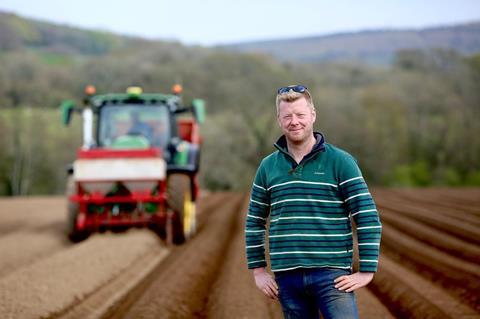
Precision breeding forms a key ask in NFU Cymru’s Growing Together manifesto, and in a new video, Crops & Horticulture Group chair Tom Rees explained to Senedd candidates why the opportunities offered by precision-breeding techniques must be made available to farmers in Wales.
Speaking from the cab of his tractor while taking a break from planting potatoes in Pembrokeshire, Rees urged the next Welsh Government to take a science-led approach to deciding on policy in relation to precision breeding to ensure that farmers in Wales are not left behind in terms access to future technology.
NFU Cymru stated that the next Welsh Government must create the right policy environment to allow Wales as a whole to realise the benefits of these new precision-breeding techniques.
“Access to gene editing is vital for Welsh agriculture going forward,” he said. “It’s the next stage of technology and it presents so much opportunity for the sector. It would allow us to become more efficient, reduce inputs and make us more environmentally friendly.”
Relating it to his own enterprise, Rees spoke of the exciting prospect of potato varieties that are able to better withstand – or even resist – blight, as well as crops that are more tolerant of insect and disease pressure. These are developments that should cut the amount of inputs he has to use over the course of a season, he stressed.
Rees underlined that precision-breeding techniques now offer the next step forward in the development of crop varieties for a world which continues to change, all while still ensuring that produce, such as the humble Welsh potato, still passes the taste test with consumers.
He said: “I think it’s so important that Welsh agriculture is at the forefront of this. Not only are we as farmers competing on a world market, but we’re also competing at a UK level, too. If we don’t have access to developing precision-breeding techniques, it’s going to leave us at a disadvantage.
“I want to see the next Welsh Government take a science-based approach to gene editing, to look at the benefits it can bring and how by working with the industry and the fantastic research institutions we have here in Wales, it can help move the whole Welsh economy forward.”