Boost in Australia’s fruit consumption driven mainly by oranges, kiwifruit and grapes
Australians bought more fruit and fewer vegetables in 2024/25 compared to the previous financial year (July-June), according to new data released by the Australian Bureau of Statistics (ABS).
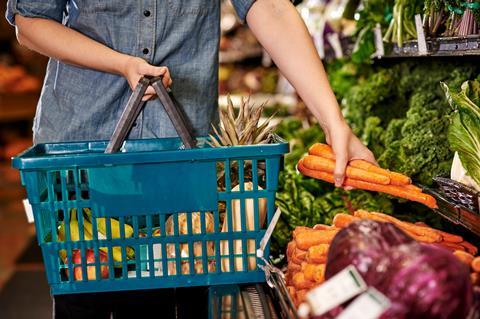
The Apparent Consumption of Selected Foodstuffs, Australia report measures the amount of food and non-alcoholic beverages purchased from the food retail sector. This includes major supermarkets and smaller outlets such as convenience stores, butchers, seafood shops, bakeries, delis and fresh food markets.
Julie Watkinson, ABS head of health and disability statistics, said: “Fruit consumption increased by 1.4 per cent, driven mainly by oranges, kiwifruit and grapes, while vegetable consumption fell by 1.7 per cent.”
The increase in fruti consumption was equivalent to around 2 grams more fruit per person per day, partly reversing declines seen in recent years.
Citrus fruit increased to 18.9 grams per capita per day, a rise of 9.2 cent year on year.
Other fruit (driven by kiwifruit and grapes), grew 0.7 grams to 29.1 grams or 2.5 per cent.
In contrast, ABS found berry fruit consumption fell by 0.4 grams to 14.5 grams per capita per day, a fall of 2.7 per cent.
Despite the increase, fruit consumption in 2024/25 remained 8.7 grams per capita per day below 2018/19 numbers. Berry fruit was the only category to increase over this period, rising by 2.3 grams per capita per day, a rise of 18.9 per cent.
“Australians purchased around 181 grams of vegetables per person per day in 2024/25, down from 184 grams the previous year and the lowest level recorded in the seven-year series,” Watkinson said.
The largest falls were for avocados (down 12 per cent), which is classified as a vegetable in the food consumption dataset, pumpkin (down 8 per cent) and peas and beans (down 7 per cent).
Cabbage, cauliflower, broccoli and similar brassica vegetables, were down 0.5 grams to 12.5 grams – a drop of 3.8 per cent. Carrot and similar root vegetables, dropped 1.8 per cent to 21.5 grams. Smaller decreases occurred in tomato and tomato products, down 1.3 per cent and potatoes, chips and other potato products, down 0.2 grams (0.5 per cent) to 39.2 grams.
Leaf and stalk vegetables were the only sub-major vegetable category not to decline, remaining relatively unchanged at 12.7 grams per capita per day (up 0.1 gram or 0.8 per cent), the ABS said.
According to the report, the decline in vegetable consumption in the 2024/25 year is a continuation of the longer-term decrease seen since 2018/19, with vegetables falling from 5.9 per cent or 192.2 grams to 180.9 grams per capita per day.