Hyojun Kim shares an overview of Korea’s citrus market following a surge in imports of Californian mandarins this year, noting clear lack of brand leadership in the category
Something shifted in Korea’s imported citrus market in the first quarter of 2026.
This year, Californian mandarin imports rose from a value ofUS$11.62mn in Q1 2025 to US$17.62mn in Q1 2026, an increase of approximately 52 per cent surpassing lemons imports (US$10.70mn) for the first time. This shift is significant as lemons are imported year-round, mandarins are not.
Oranges told a different story. Import value fell from US$86.74mn to US$64.28mn, a decline of approximately 26 per cent year on year. The data suggests a cannibalisation effect between mandarins and oranges is now visible at the market level. Grapefruit, which narrowly trailed mandarins in annual import value last year at US$20.43mn, is expected to fall further behind in 2026.
On paper, the mandarin era has arrived. However, the Q1 brand-level import data tells its own story.
Sunkist led with 147 containers (31.6 per cent of total imports), followed by Cuties at 139 containers (29.8 per cent), Halos at 95 containers (20.4 per cent), and others at 85 containers (18.2 per cent), according to the Korea Food Safety Information Service.
The top three brands account for 80 per cent of total volume, suggesting an established market structure. But walk into a retail store, and the picture changes entirely.
What the shelf actually says
As of April 2026, California mandarins are effectively the only citrus option on Korea’s retail shelves. Domestic citrus supply has declined, with local varieties mostly limited to larger premium types such as Kara-hyang. This is mandarin’s moment.
And yet the shelf tells a confusing story.
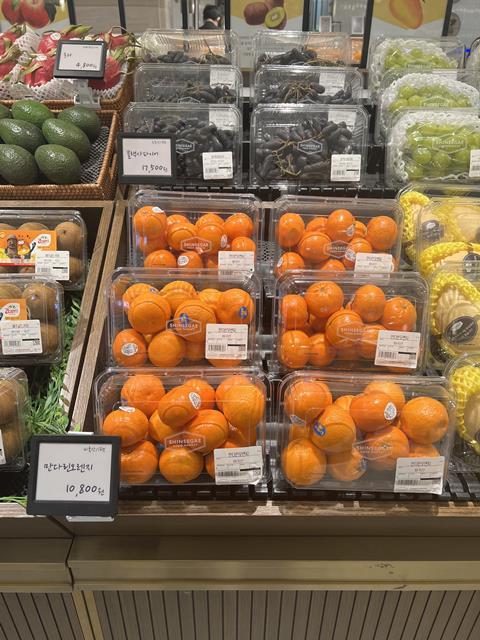
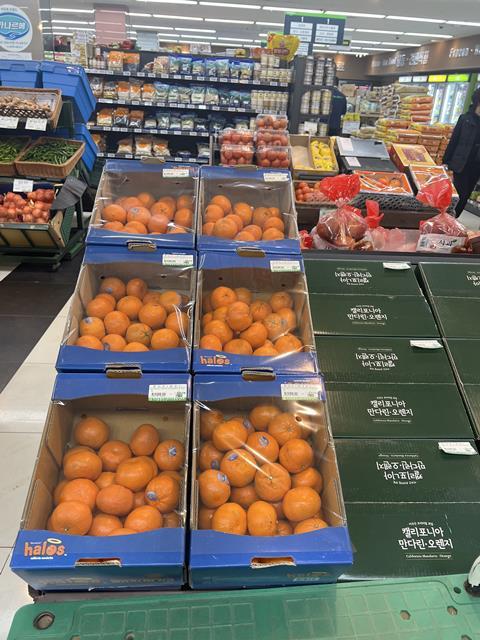
Sunkist, Cuties, Halos, and various other brands appear within the same SKU. In some cases, fruit carrying different brand stickers is packed together in a single box. The consumer has no way of knowing – or choosing – which brand they are buying. The structure does not require them to.
While some brands do operate branded packaging including Sunkist, Halos, and Cuties, packaging is not branding. Beyond the pack itself, there is no in-store promotion, no consumer communication, no field management.
The one exception is Sunkist, which runs a consumer promotion – made possible by the presence of a local office. But the promotion covers the full citrus range rather than mandarins specifically, dispersing its impact across categories.
As a result, the brand with the most volume, the brand with the second most volume, and the brand with the third most volume are all failing to meet the consumer.
What happens at the end of the season
As the season closes and quality declines, something predictable occurs.
At the packing facility, and increasingly at the store level, fruit is bundled and repacked without regard to brand. The priority is clearance. Brand identity is not a consideration.
The consumer sees poor packaging. They see fruit that does not look fresh. They take it home and find quality that does not meet expectations. The experience accumulates. And the conclusion they draw is not that Halos disappointed them, or that Cuties let them down. The conclusion is that California mandarins are not worth buying.
No brand owns the category, so no brand is responsible for it. No one is responsible, so no one manages it. The result is a category that is growing in volume while eroding in consumer trust.
Korea’s domestic citrus growers are observing this closely. At the precise moment when California mandarins dominate the shelf, the category is generating its own quality controversy. When domestic supply recovers, the narrative writes itself: domestic is better. Korea’s mandarin importers are not just failing to build a brand. They are handing their competitors the argument they need.
A message to the brands with volume
The Q1 data confirms that Korea’s mandarin market is growing. But a growing market and a strengthening brand are not the same thing.
Korean consumers respond to brands. Consistent quality, a clear story, a direct presence – these are what build lasting market position.
California mandarins’ window is open. It will not stay open forever.