Hyojun Kim details the latest food craze taking hold in Korea and what it means for the future of fresh produce consumption and marketing
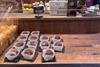
Korea is currently in the grip of a dessert craze known as Dujjonku. To make the product easier to find, consumers have created online maps sharing store locations and stock availability. Some have even coined the term “Du-se-gwon” – literally meaning “within Dujjonku distance” – a playful adaptation of Korea’s widely used real estate expression “Yeok-se-gwon”, which refers to neighbourhoods located close to subway stations.

Dujjonku is a chewy, cookie-style dessert inspired by the so-called “Dubai chocolate”, itself modelled on products from Dubai-based chocolatier Fix Dessert Chocolatier. It combines pistachio spread and kadaifi pastry filling, wrapped in a marshmallow-like dough.
The trend reached a clear inflection point in autumn 2025, when Jang Wonyoung, a member of K-pop group IVE, shared a photo of the dessert on her Instagram story. From there, exposure across social media platforms and YouTube accelerated replication, and by early 2026 Dujjonku had evolved into a broader social phenomenon.
One distinctive feature of the Dujjonku trend is that the original recipe was publicly released by its creator. This lowered barriers to entry across the foodservice sector, allowing small independent operators to produce the dessert daily, often selling out within hours. Production quickly spread beyond bakeries, with restaurants specialising in items such as tonkatsu or sushi also adopting the format. Major bakery chains and luxury hotels have since entered the market, launching their own versions of Dujjonku.

The surge in consumption has had an immediate impact on Korea’s pistachio market. Pistachios have become scarce, with strong demand triggering early-morning queues at warehouse retailers such as Costco, the introduction of per-customer purchase limits, and noticeable price increases.
Import data tells a more nuanced story.
Korea imported 1,694 tonnes of pistachios in 2023, rising to 2,100 tonnes in 2024 as the Dubai chocolate trend first emerged, before easing slightly to 2,001 tonnes in 2025. Import values remained broadly stable, at US$24.67m in 2024 and US$24.07m in 2025.
A closer look at the timing reveals where the real disruption occurred. In December 2025 alone – when the Dujjonku trend intensified – pistachio imports worth US$6.2m entered Korea, accounting for 26 per cent of the year’s total import value. In addition, while in-shell pistachios typically dominate Korea’s imports, the surge in dessert manufacturing temporarily reversed this pattern, with pistachio kernels overtaking in-shell volumes during peak demand periods.
The phenomenon has even extended beyond consumption, influencing social behaviour. The Korean Red Cross recently offered Dujjonku as a gift to blood donors as part of a promotional campaign, reporting that donor numbers doubled as a result. National blood reserves, which had fallen to the equivalent of three days’ supply, recovered to four days within just three days of the campaign’s launch.
Such episodes are not unusual in Korea’s consumer market. In 2024, for example, a canned “fresh lemon highball”, featuring a visible slice of fresh lemon inside the can, became a runaway success, selling more than one million units within a month of launch. Peak demand coincided with the seasonal transition of lemon supply from the northern to the southern hemisphere, prompting air reight imports simply to secure lemon slices for the product. Today, however, the drink is readily available and demand has stabilised.
In this way, fruit is no longer consumed simply as a fresh product, but increasingly as a key ingredient in the creation of new products, generating entirely new forms of demand. Which fruit will be next to drive a similar shift in demand in the Korean market remains an open question.