Chile’s Constitutional Court rejects Maersk’s liability and upholds compensation limit
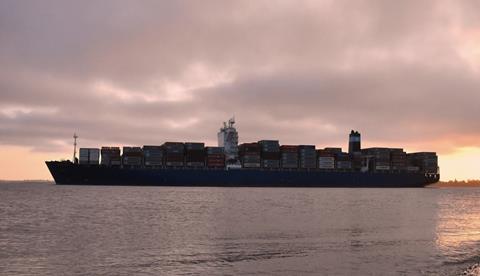
Chile’s Constitutional Court has rejected a claim by seven cherry exporters that a compensation scheme set up by Maersk for the losses incurred in the Maersk Saltoro case was unconstitutional.
The case centres on a containership owned by the Danish shipping giant carrying 5mn cartons of Chilean cherries bound for China, which broke down in the Pacific Ocean in January of last year. When the ship eventually arrived at China’s port of Nansha 28 days later than scheduled, the entire cargo was rejected by Chinese authorities, resulting in multimillion-dollar losses for the exporters.
Previously, Maersk had committed to establishing a liability limitation fund of US$16.4mn, well below the estimated US$160mn losses incurred by the exporters.
As reported in PortalPortuaria, the Constitutional Court of Chile rejected the exporters’ request in a unanimous decision, confirming the validity and constitutionality of several provisions of the Commercial Code that regulate the limitation of liability in maritime transport. The decision means that the previously established liability limit of US$16.7mn – equivalent to around 10 per cent of the actual value of the destroyed shipment – remains in place.
The court’s decision sets a significant precedent for exporters, as it reaffirms the application of traditional maritime law even in cases of extraordinary losses such as this one.
Acccording to PortalPortuaria, the case highlights the inherent risks of international trade and the dependence on logistical factors that can be beyond exporters’ control. It also underscores the importance of the legal frameworks that regulate these activities, as well as the tensions between protecting private investment and ensuring the stability of strategic industries.
“While the affected companies will have to settle for limited compensation, the Constitutional Court’s ruling reaffirms the validity of a system that prioritises the sustainability of global maritime transport, even at the cost of full compensation in situations of loss,” it said.
“The legal outcome, although unfavourable for the exporters, establishes a benchmark for future similar conflicts and raises questions about how to better balance the rights of the actors involved in an increasingly complex and demanding trade chain.”