Key production region manages to increase export output despite cost challenges
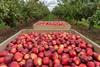
The Korean pear industry has overcome mounting challenges to increase its exports, easing the burden on the domestic market.
Asan, South Chungcheong, is a key hub for Korean pear exports and home to the Korean Pear Export Association.
According to a Chosunbiz report, pear exports from the region reached 1,529 tonnes last year, up 36.2 per cent from the year prior. This year, the goal is to export 2,000 tonnes, about 31 per cent more than in 2025.
These gains were made despite a difficult trading environment; officials from the region noted that freight costs have increased fivefold. The poor won-dollar exchange rate has also hurt returns.
Koo Bon-kwon, chair of the Korean Pear Export Association, told Chosunbiz that increasing exports helped to balance domestic supply and demand.
“To keep pear prices stable, about 20 per cent of production needs to be exported,” he said.
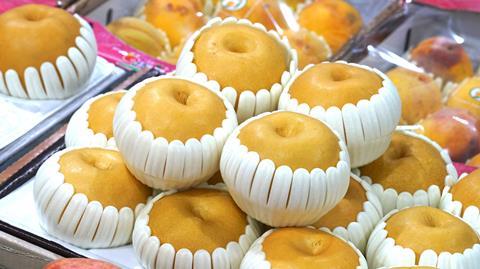
To support these efforts, the association developed a new, unified K-Pear branding and packaging to help differentiate the Korean product. Previously, different regions and exports used different branding, but the association hopes a more uniform approach will raise the brand value of Korean pears.
“Korean pears are about three times more expensive than Chinese pears, but they are hard to tell apart by appearance and packaging alone,” Koo added. “We developed standard packaging to imprint that they are high-quality Korean pears on overseas consumers.”
Export diversification is also underway, with the industry exploring entry into the Middle East. The industry currently ships the majority of its exports to the US, Canada, Taiwan, and Vietnam.