Northwest Horticultural Council says elimination of tariffs and import licensing on US tree fruits will help double exports to Indonesia
The Northwest Horticultural Council (NHC) has hailed the recently announced reciprocal trade agreement between the US and Indonesia as “welcome news for Pacific Northwest tree fruit growers”.
President Trump’s administration and the Indonesian government announced they had finalised the trade deal last week during a visit to Washington by Indonesia’s president Prabowo Subianto to attend the first meeting of the Trump-led ‘Board of Peace’.
Under the agreement, Indonesia will eliminate tariffs on more than 99 per cent of US exports, including agricultural products, and crucially it will exempt all US food and agriculture shipments from its import licensing systems, according to a White House statement.
The NHC, which represents growers, packers, and shippers of apples, pears, and cherries in Washington, Oregon, and Idaho, highlighted the exemption as a key breakthrough.
“The agreement makes much needed fixes to Indonesia’s import licensing scheme – the source of a multi-week market closure for US apples each year,” the NHC said in a media release.
The agreement also eliminated a 5 per cent tariff on US apples, pears and cherries, helping US growers to compete in the Indonesian market.
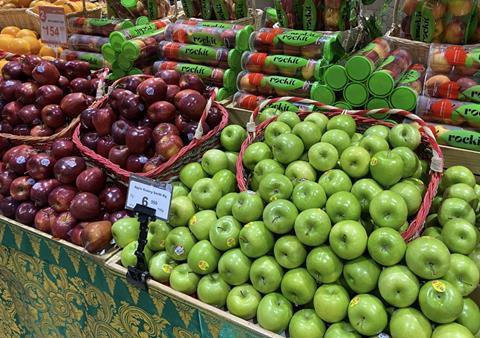
In addition to this, Indonesia has committed to purchasing 1.4m 40lb (18kg) cartons of apples each year, which equates to almost 26,000 tonnes.
“The Northwest Horticultural Council supports the investment President Trump, ambassador Greer, and the staff of the Office of the US Trade Representative have made to secure this agreement,” said NHC president, Mark Powers.
“By resolving the long-standing import licensing trade barrier, reducing tariffs and securing a purchase commitment for US apples, this agreement will help double our exports to Indonesia.”
US apple exports to Indonesia have declined by some 70 per cent since 2012 horticultural import licensing was imposed, according to the NHC. It said the trade barrier remained despite a World Trade Organisation ruling in 2016 that determined the import licensing scheme unfairly restricted trade.
During the 2024/25 season, Washington apple growers shipped nearly 700,000 40lb (18kg) cartons of apples to Indonesia. The NHC estimates the removal of trade barriers under the deal will boost exports by as much as US$25m annually.
Several other US fruit export sectors are also set to benefit from the trade agreement through the removal of import licensing requirements and elimination of duties.
Indonesia has committed to import 5,000 tonnes of US grapes annually. It has also agreed to purchase 3,000 tonnes of US citrus and eliminate duties on key citrus products, including mandarins and clementines (currently 20 per cent) and lemons, limes and grapefruit (currently 5 per cent).
Indonesia’s government has said the newly signed trade agreement remains valid and is moving ahead, despite the subsequent US Supreme Court ruling that the Trump administration’s emergency tariffs were unconstitutional. Coordinating minister for economic affairs Airlangga Hartarto told local media that the bilateral agreement continues to stand because it operates under a separate mechanism from the broader tariff policy addressed by the court.