Exports reach US$343.3mn in the first seven months of 2026, up 26 per cent on the same period last year
Vietnam’s fruit and vegetable exports to the EU have reached a record US$343.3mn in the first seven months of 2026, up 26 per cent on the same period last year, according to Vietnam Customs data cited in a Vietnamnet Global report.
The latest increase marks a continuation of the recorded growth since 2022, which, when comparing the first first seven months of each year, has reached an average of 29.4 per cent.
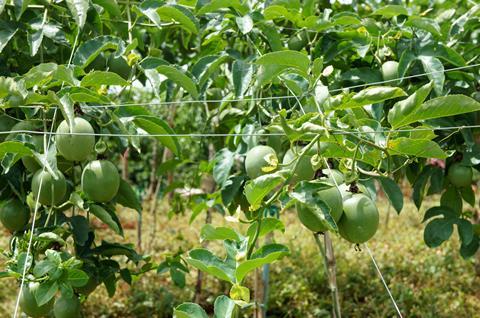
Over that time, passion fruit accounted for around 33 per cent of the total export revenue with an average growth of 40 per cent. The tropical fruit generated more than US$116mn in the first seven months of 2026 alone, while mangoes reached nearly US$41.2mn and coconuts almost US$35.7mn.
The customs data also showed strawberry export revenue had reached US$4.8mn, equivalent to around 1.4 per cent of Vietnam’s total fruit and vegetable export value to the EU. The emerging category could continue to gain traction given the surging global demand, according to Vietnamnet Global.
The Netherlands, which also serves as the largest logistics hub for Vietnamese agricultural products distributed to Germany, Belgium, France and Scandinavia, remained the leading EU market in 2026 with exports reaching nearly US$134.8mn. The country accounted for 39.2 per cent of Vietnam’s total exports in the category to the EU.
Germany ranked next, importing more than US$68.9mn worth of Vietnamese fruit and vegetables, representing 20 per cent of Vietnam’s exports in the category to the EU. According to Vietnamnet Global, the country has strong demand for tropical fruit, bottled fruit juice and processed or dried vegetables.
Nguyen Van Muoi, deputy secretary general of the Vietnam Fruit and Vegetable Association, told Vietnamnet Global the EU-Vietnam Free Trade Agreement (EVFTA) provides significant tariff advantages, which helps Vietnamese fruit and vegetables compete more effectively on price against products from South America and Africa.
At the same time, the country’s investment in preservation technology and deeper processing, including juice production and drying, is expanding opportunities for Vietnamese businesses.
However, Muoi also pointed out two major challenges facing Vietnamese exporters.
He said the EU was increasing inspection frequency and tightening requirements on maximum residue levels (MRLs) for pesticides in fresh agricultural products, particularly dragon fruit. And added that products falling within the scope of the EU Deforestation Regulation (EUDR) must meet the regulation’s traceability and due diligence requirements.
Depite steady growth in exports, Muoi said Vietnamese businesses must keep up with regulatory changes and complete traceability documentation if they are to maintain and expand their presence in the market.