Growers report high-quality crop despite the rain at the start of the year
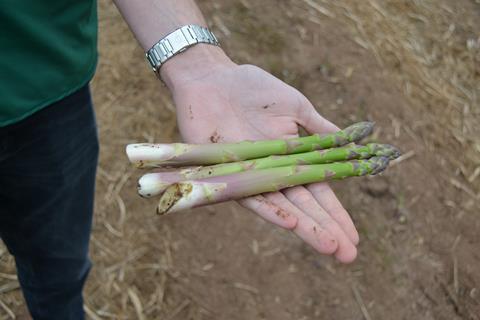
The British asparagus season has officially begun, with early spears on sale across the country.
Asparagus is one of the most eagerly anticipated crops in the British food calendar, but as the British Asparagus Growers’ Association points out, the season each year is very much shaped by last summer’s weather.
It reports that the sunny, dry summer of 2025, paired with the heavy rain at the start of 2026, means that this year’s spears will be “sweet, tender, and packed full of flavour and goodness”.
Asparagus grows from a crown, which is planted 20cm underground and has a combination of fine roots for collecting water and nutrients, and thicker roots for storing carbohydrates and sugars.
Each year, the plant uses 20 per cent of its stored nutrients, but that is replenished later in the summer when harvesting stops, and the plants grow ferns to collect the sunlight.
Asparagus crowns are planted in years one and two, when the plant is left alone to strengthen its roots and build a store of nutrients. In year three, a small cut is taken to encourage spear growth, but spears aren’t often used. In year four, a fuller crop is harvested, and by year five, the plant is in full production.
Claire Donkin, technical lead for the British Asparagus Growers’ Association, explained: “Asparagus is relentless. Each year, the plant wants to grow above the ground to absorb light and oxygen, and we come along and chop its head off daily until 21 June. Then we finally let it grow. But it’s worth remembering that you’re eating five years of goodness. You’re eating history.”
The traditional British asparagus season begins on St George’s Day on 23 April, and lasts eight weeks until the summer solstice on 21 June.
At the end of the season, the growers put down their tools, and the asparagus plants grow ferns to absorb the sun to replenish their energy reserves before becoming dormant for the winter months.