Initiatives aim to help boost farms’ resilience and cut emissions

Two projects aim to boost the tomato sector

Two projects aim to boost the tomato sector

Image: Adobe Stock

A precision-breeding tomato project and a faba bean ingredient initiative are among 15 projects receiving at least £21.5mn of government funding aimed at helping farms cut emissions, strengthen resilience and boost productivity.

Defra said the proejcts – through the Farming Innovation Programme in partnership with Innovate UK – will ”move cutting-edge research into practical tools farmers can use on the ground”.

The projects include one dubbed ‘Sunshine Tomato’, which uses precision breeding to create a tomato enriched with provitamin D3. Building on earlier field trials, it aims to improve nutrition and help tackle vitamin D deficiency.

It is being lead by John Innes Enterprises and has received £967,797 in funding.

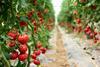
A further tomato project, ’Autotom: Reimagining Tomato Production Through Precision Breeding and Automation’, is being lead by Cambridge Glasshouse Company and has receved £1.76mn in funding. 

Combining compact precision-bred tomato plants with automated greenhouse systems and conveyor-based harvesting, the project aims to cut labour needs by over 70 per cent and boost yields to 45–50 kg/m²/year.

Another project, with the name ’Innovative Faba Bean Feed Ingredients: Enteric Methane Abatement and Feed Carbon Intensity Reduction in English Dairy Systems’, is being run by McArthur Agriculture and has received £1.5mn.

It aims to demonstrate how UK-grown faba bean feed ingredients can be used to reduce emissions from English dairy systems by up to 1.6mn tonnes of CO2e per year, targeting enteric methane using faba bean co-products rich in condensed tannins.

Farming minister Dame Angela Eagle said: ”Innovation is central to a more productive, resilient farming sector. This funding will back new ideas farmers can use on the ground to cut methane and fertiliser-related emissions, strengthen crop resilience, and improve nutrition. It’s part of our Plan for Change to support rural growth and long-term food security.”

The government has said it will invest at least £200mn in agricultural innovation by 2030.