Major Australian citrus grower-packer unveils multi-million upgrade at relaunch event
Australian citrus grower-packer-exporter Legacy Packing recently hosted the official relaunch of its state-of-the-art packing facility in Cobram, Victoria.
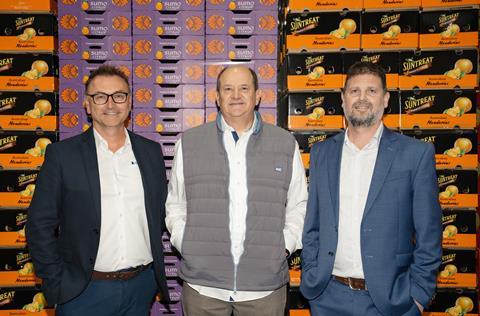
The event – held on 11 June – was attended by more than 130 guests spanning domestic and export customers, upgrade partners, government officials, industry representatives, and growers.
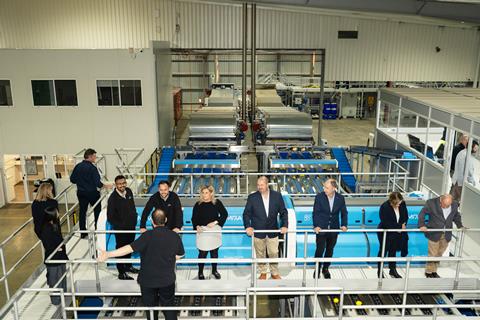
Attendees were given a tour of the fully revamped facility, which has been fitted out by technology partner Tomra with AI-enabled sorting and packing systems, enhancing speed, accuracy and consistency.
The upgrade includes a ten-lane pre-grade and ten-lane commit-to-pack line with Tomra’s LucAI, which is set to pack over five times the volume of the previous line. Palletisation has also been automated with robotic palletisation specialist JMP Engineering.
Legacy Packing is part of California-based fresh produce company AC Foods Group, and the upgrade marks AC Foods’ biggest investment in the Southern Hemisphere. It also represents Tomra’s largest single installation in the Asia-Pacific region.
Brett Jackson, AC Foods Australia general manager, said he was thrilled to see the successful completion of the project, hailing it as a milestone for the company and the Australian citrus industry more widely.
“If you looked at this facility on 2 January this year, it was completely empty – all 10,000m²,” he said. “Together with our partners at Tomra and JMP, we’ve brought in 97 40ft containers of equipment and installed 12km of wiring. A huge amount of work has gone into the project over the past six months.
“We’re really happy with how smoothly it’s gone – and that’s credit to the planning and organisation of the teams at Legacy, Tomra, JMP and our local contractors. We’ve now started commercially running fruit.”
The AI technology and expanded capacity enable Legacy to pack fruit to suit each market’s requirements with greater accuracy, speed and efficiency. The new lines can pack more than 1,000 bins of mandarins a day and close to 1,500 bins of navel oranges in a single shift. Legacy will also be able to pack to the same high standards for third-party growers.
“We’ll be able to pick and pack fruit as soon as it’s ready rather than having to slow down picking on the farm for us and our third-party growers,” said Jackson. “We won’t be imposing any picking quotas on our growers due to capacity.”
Importantly, the upgrade also helps Legacy to minimise labour requirements. “Labour on farms is fixed, so realistically the only area we can save is in the packhouse,” he said. “This facility enables us to handle five times the volume with the same number of people we had before.”
The timing of the upgrade coincides with increased volumes coming online at AC Foods’ orchards as young plantings of its Sharanui mandarins (branded Sumo Citrus) enter production.
“We expect to harvest around 45,000 bins (around 7,200 tonnes) of Sumo this year, a four-fold increase on last year,” said Jackson. “This will almost double to 70,000 bins (11,200 tonnes) next year.”
Sales are broadly balanced between export and domestic markets, with Jackson identifying good growth potential on both fronts. “We’re investing in our marketing here in Australia as we still have work to do in introducing Sumo to new customers,” he pointed out
Exports are mainly going to Asia (predominantly China) and the US. While Australian-grown Sharanui mandarins do not currently have market access to Japan and Korea, Jackson said he’s hopeful that Japan will open its doors next season.
Brix testing is currently done in the orchard to measure sweetness, but in what looks like a timely move, Legacy is also planning to add NIR technology to its sorting lines next year.