Speakers on Asia Fruit Logistica’s new FreshTech stage discussed the technologies reshaping how fresh produce is bred, monitored for disease, and harvested
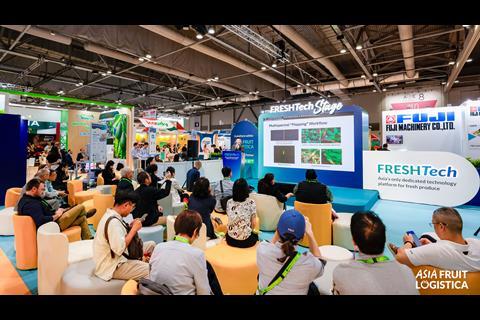
From ‘upstream breeding’ to drone-enabled disease detection and AI quality control using iPhone photos, speakers on Asia Fruit Logistica’s new FreshTech stage opened with a session on the latest innovations in smart agriculture.
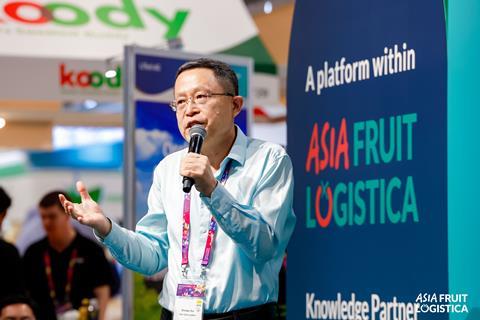
Rijk Zwaan’s managing director for R&D, Zhong Kui Sun, explored the breeder’s efforts to develop new vegetable varieties that reduce food loss and meet the changing needs of growers. These include labour efficiency, disease resistance, stress tolerance, and compatibility with future robotic harvesting.
When it comes to food waste reduction, he flagged up Rijk Zwaan’s well-known lettuce trait Knox, which delays post-harvest discolouration and extends shelf life, as well as its ‘one-cut’ Salanova lettuce range, which reduces labour requirements in foodservice.
Sun stressed that genomic breeding has allowed Rijk Zwaan to speed up its breeding process in the last few years. Meanwhile, digital phenotyping has propelled the company’s transition to data-driven breeding.
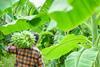
Next up, William Leonard of TMSX explained how the Indonesian agri-research group is taking an integrated drone-based approach to detecting and managing the widespread banana disease Sigatoka, while reducing the use of chemicals.
He told the audience that multispectral imaging can support earlier detection of the fungal leaf-spot disease, as well as forecasting how severe it will be, while geospatial mapping can identify disease hotspots in a banana plantation.
Another interesting area of research is in ‘SynComs’ (synthetic microbial communities) – which are essentially artificially engineered beneficial microorganisms. These have the potential to suppress pathogens without the need for fungicides, Leonard said.
Delivered through targeted drone delivery to the banana plant’s leaves, SynComs can induce plants to secrete compounds that kill the pathogen itself, thereby reducing the cost of spraying and minimising chemical residues. For now, studies remain limited, however, especially for Sigatoka.
On the related topic of maximising fruit packouts, South African agritech firm Aerobotics presented its TrueFruit Bin Scan system to help growers of a range of fruits (including citrus and apples, among others) know what they have picked before it is packed.
The smartphone-based system provides standardised fruit quality data within minutes to help fresh produce growers optimise their harvest and packhouse decisions.
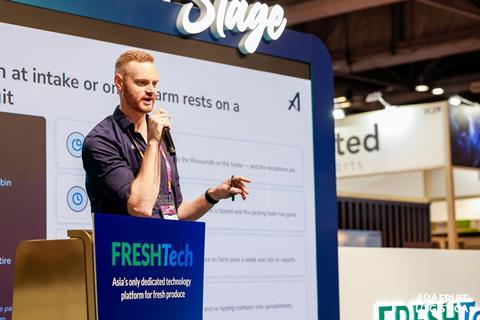
Aerobotics’ general manager for Asia Pacific, Benjamin Sharpe, explained that packhouse intake decisions often rely on small, subjective and unrepresentative samples that may not accurately represent the millions of pieces of fruit that are picked.
Meanwhile, delayed feedback to pickers can allow issues with fruit size, colour, stems and defects to spread across picking teams and blocks.
But with just one iPhone photo per bin – taken either in the packhouse or out in the orchard – the TrueFruit Bin Scan app allows growers to scan and receive data on hundreds of pieces of fruit, Sharpe said.
The software tracks size, colour, picking quality (by assessing stems), blemishes, and defect classifications (including sunburn, thrips damage and hail damage).
Finally, on the hot topic of irrigation, Gal Yarden of Netafim, a global manufacturer of drip irrigation systems, showcased the company’s GrowSphere operating system for irrigation and fertigation.
The platform helps growers plan, control and monitor all their irrigation systems together in one place, with the aim of minimising their operating costs and improving yields.