US apples, cherries, peaches and pears among wide range of fruits to enjoy duty-free access under reciprocal trade agreement
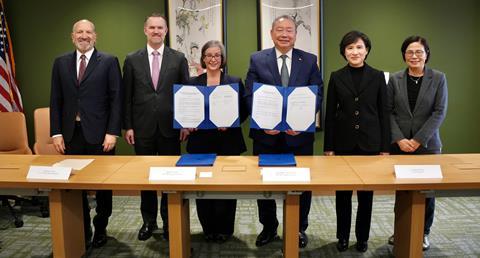
The US and Taiwan have signed a reciprocal trade agreement that will see Taiwan eliminate or reduce 99 per cent of tariff barriers and provide preferential market access for US industrial and agricultural exports, including horticulture products, the office of the US Trade Representative has said.
The agreement, which was signed in Washington on Thursday, is set to optimise the broader US-Taiwan trade framework, increase bilateral investment and commercial opportunities and deepen their high-tech strategic partnership.
A raft of US fresh produce exports will see tariffs eliminated once the agreement enters into force. US apples and pears, which currently incur duties of 20 per cent and 10 per cent respectively, will enjoy zero-tariff access. Tariffs on US cherries (currently 7.5 per cent), peaches, nectarines and plums (20 per cent), strawberries (20 per cent), blueberries (7.5 per cent) and lemons (15 per cent) will also be eliminated.
US grapefruit, which currently incurs a seasonal tariff of 15 per cent between 1 January and 30 September, and 30 per cent between 1 October and 31 December, will enjoy duty-free access.
While duties will be removed on most fresh fruit exports as the agreement comes into effect, other key items such as grapes (20 per cent) and mandarins (35 per cent) will see scheduled reductions in tariffs.
A wide range of US fresh vegetable exports, many of which face tariffs of around 20-25 per cent, will also be tariff-free once the agreement enters force.
US trade representative Jamieson Greer and commerce secretary Howard Lutnick attended the signing alongside Taiwan’s vice premier Li-chiun Cheng and its government minister Jen-ni Yang.
“The Agreement on Reciprocal Trade with Taiwan will eliminate tariff and non-tariff barriers facing US exports to Taiwan, furthering opportunities for American farmers, ranchers, fishermen, workers, small businesses, and manufacturers,” Greer said in a statement.
“This agreement also builds on our longstanding economic and trade relationship with Taiwan and will significantly enhance the resilience of our supply chains, particularly in high-technology sectors.”
While it will take some time to see the ongoing impact the reduced tariffs will have on US-Taiwan fruit trade, some Taiwanese importers have expressed initial reservations citing previous examples of increased supplier quotes and low-ball offers from wholesale and retail buyers.