Gold3 variety will come off patent in 2029, but Andean nation’s challenges with growing yellow-flesh kiwifruit may limit local production possibilities
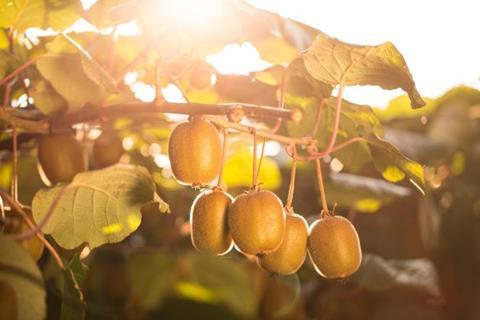
New Zealand kiwifruit marketer Zespri recently confirmed that the plant variety right for its Gold3 (G3) cultivar is set to expire in 2029.
The expiry, which came as a surprise to Zespri, is explained in its November bulletin, Kiwiflier, and reportedly stems from the ‘different settings’ Chile applies compared with other jurisdictions in which Gold3 is protected.
Chile is a signatory of the 1978 Convention of the International Union for the Protection of New Varieties of Plants (UPOV) – an older version of UPOV – and the nation has elected to apply the minimum protection period for trees and vines for 18 years compared with 25 years in the more recent UPOV 1991, according to Zespri.
The main issue arises from how Chile decides the start date of the PVR protection.
“Rather than starting a PVR term on approval and calculating the term forward, its term starts at the registration but is backdated to when the application was provisionally accepted,” Zespri noted. “Our Gold3 PRV was provisionally accepted in January 2011 and granted in September 2025.
“These settings have resulted in the Chile Gold3 PVR expiring earlier than we had previously understood. This has been recently discovered through our efforts opposing a PVR for the E2 kiwifruit variety, with that work ongoing.”
Challenges for Chilean production of G3
Given the imminent expiry, Zespri said it was reviewing the potential for third parties to successfully produce Gold3 in Chile. However, it noted that initial assessments indicated there were some significant challenges in consistently producing high-quality yellow kiwifruit under local growing conditions.
Carlos Cruzat, president of the Chilean Kiwifruit Committee, shared a similar view, acknowledging the potentially exciting commercial opportunity for domestic producers but also pointing out the challenges Chile faces growing certain varieties on account of the presence of the soil-borne disease Verticillium.
“G3 is an excellent variety that is well-recognised in the market,” Cruzat told Fruitnet. “Therefore, any country capable of offering it will benefit from the outstanding work carried out by producers in New Zealand.
“As with any new variety introduced in Chile, it must first be evaluated under actual commercial production conditions – specifically regarding its susceptibility to the fungus,Verticillium, which is present in Chilean soils and has posed a major obstacle for many other varieties.”
While Chile’s kiwifruit plantings have been on a sharp increase, the green Hayward variety accounts for around 98 per cent of new plantings, Cruzat told Fruitnet. This largely owes to its tolerance toVerticillium, which has claimed large swathes of plantings of other varieties. Yellow and red varieties are susceptible to the disease, but the yellow-flesh Jingold and Soreli varieties are showing good tolerance, Cruzat pointed out.
Zespri added in its Kiwiflier that although the G3 PVR will expire in Chile in 2029, the company retains “a number of important protections” that support Gold’s commercial value.
“These include PVR protection in other strategic markets alongside the strength of the Zespri brand, our global supply chain market access, customer relationships and quality systems,” the marketer said.
Zespri said it was also continuing work to oppose the granting of a PVR right for the E2 kiwifruit variety.