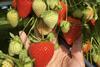
Producers of the Godolesh variety believe its distinctive identity could find favour amongst discerning European consumers

Albania has a long tradition of cherry production, with important growing areas in Korçë, Dibër, Elbasan and Berat. Among them, Godolesh, near Elbasan, has emerged as a distinctive local cherry-growing area, producing around 700 tonnes annually and becoming increasingly associated with Albania’s cherry identity.
In this agricultural landscape, Godolesh, near Elbasan in central Albania, stands out as a distinctive cherry-growing area. Known locally as the “village of cherries”, it produces around 700 tonnes annually, with prices reaching up to €5.15/kg, this season.
Its native variety, cultivated sustainably and associated with the area, gives Godolesh a distinctive identity and potential advantage in regional and international markets. The region’s annual ‘Cherries and Love’ festival further connects production with local tourism and community identity.
From local production to export potential
Godolesh already supplies regional markets, with exports reaching Kosovo and North Macedonia, and producers are now looking toward markets including Italy and Greece, followed by Germany and Austria.
The opportunity comes within a wider Albanian cherry sector. The country’s main production areas include Korçë, with around 480ha of orchards and an annual production of 3,200–3,500 tonnes, and Dibër, with around 400ha of plantings and more than 3,000 tonnes of annual production. Godolesh therefore represents a relatively small but distinctive part of a broader national production base.
Quality, sustainability and origin
Farmers in Godolesh are increasingly adopting more sustainable production practices while preserving the characteristics of the native variety. They believe this combination of local origin, quality and sustainability could provide the basis for a differentiated product in European markets.
Albania has experience with both traditional cultivars and internationally established varieties like Burlat, Napoleon, Ferrovia and Catalina. Burlat, in particular, remains an important commercial reference.
A niche opportunity in Europe
The European cherry market offers significant opportunities, with Germany, Austria, the UK, Italy and France among the major importing markets identified by the available market data. Italy accounted for around 16 per cent of the cherry import market by value, underlining the potential importance of nearby European markets for Albanian producers.
For Godolesh, the opportunity is not necessarily to compete with the largest producing countries on volume, but to build a recognisable origin based on variety, quality, traceability and seasonal availability.
The road ahead
Infrastructure, collection, logistics and access to premium markets remain important challenges. Strengthening these links will be essential if Godolesh is to move from a well-known local production area to a recognised Albanian cherry origin in European markets.
Godolesh has the ingredients of a distinctive agricultural story: a native variety, an established production tradition, growing market ambitions and a clear sense of place. The next challenge is to turn that identity into consistent quality, market access and a stronger European presence.