Breeder brings nine of country’s most prominent apple and pear businesses into international research partnership

South African fresh-produce intellectual property manager TopFruit has appointed a group of leading apple and pear industry stakeholders as testing sub-licensees for a breeding programme called the Hot Climate Partnership (HCP), a move which significantly expands the evaluation of what are seen as promising new varieties under South African growing conditions.
TopFruit has served as the master testing partner for HCP varieties in South Africa since 2020, working closely with the programme’s international licensee and commercialisation partner, VentureFruit.
Following considerable work involving the importing, quarantine, and evaluation of varieties, the next phase of the programme is now formally underway, after TopFruit announced it would partner with several prominent South African apple and pear businesses.
As testing sub-licensees, these organisations will be able to establish evaluation plantings and assess the performance of selected HCP apple and pear selections in different production regions across South Africa.
The South African partners appointed to participate in the expanded evaluation programme include Core Fruit, Caledon Valley Nursery, Delecta Fruit, Dutoit Agri, Fruitways, Kromco and Tru-Cape, together with Two-a-Day and Ceres Fruit Growers.
At a recent event held to launch the South African HCP partnerships officially, TopFruit CEO Hein Coetzee said the work they would undertake together was crucial and likely to be mutually beneficial.
Global initiative
HCP has positioned itself as a leading global breeding initiative and the only programme dedicated specifically to developing apple and pear varieties for warmer production environments.
It brings together the New Zealand-based Bioeconomy Science Institute (formerly Plant & Food Research), the Catalan Spanish Institute of Agrifood Research and Technology, IRTA and grower group Fruit Futur, as well as the global strategic commercialisation partner VentureFruit.
Its goal is to deliver varieties that thrive under hotter, more demanding conditions while also meeting consumer expectations, with traits such as improved colour, greater sunburn resistance, and higher commercial pack-outs.
The partnership is also developing the only global database of second-generation hot climate germplasm.
The collaboration was established after an exceptionally hot 2002 summer in Lleida, in the north-east Spanish region of Catalonia, to address climate-related challenges in fruit production.
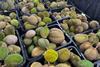
In 2020, it announced the first apple tailored specifically for growing in hot climate regions; it was called HOT84A1 and is marketed under the trademarked brand name Tutti.
That release was followed by a range of additional apple and pear selections including HOT81A1 (marketed as Stellar), an early-season variety known for consistent colour and good storability.

Hot topic
Climate challenges seen in Spain closely mirror those in many Southern African production regions, and so the programme is highly relevant to the region’s apple and pear industries.
“TopFruit is proud to be the licensed South African partner testing and managing these promising varieties,” says Corné Grundlingh, apple and pear business unit manager at TopFruit. “Appointing testing sub-licensees allows us to accelerate evaluation across South Africa’s production regions, gather broader performance data under challenging climatic conditions and give partners early access to genetics with significant long-term potential. At the same time, participating partners gain early access to promising new genetics that could offer significant long-term value to their businesses.”
The testing sub-licensees agree that HCP offers an important opportunity to evaluate robust apple and pear genetics better suited to South Africa’s increasingly challenging production conditions.
By testing promising selections across multiple regions, orchard systems and climates, the programme can generate stronger local data on fruit quality, colour, sunburn tolerance, storability, yield, pack-outs, and commercial potential.
This collaborative approach should accelerate evaluation, support future commercialisation where appropriate, and help address key causes of fruit downgrades and reduced grower returns.
TopFruit believes the programme could ultimately strengthen the resilience, productivity and competitiveness of the South African apple and pear industry.