Sustain report makes the case for widespread economic and health gains with better support for organic fresh produce
A small increase in government support for organic fruit and vegetables could deliver huge national returns for communities across the UK, while failure to act will deepen the UK’s diet, climate and farming crises.
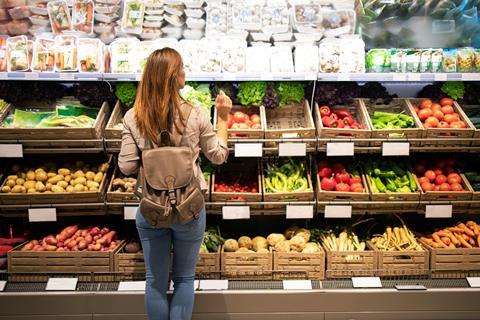
Those were the stark conclusions of a new Bridging the Gap report from Sustain, which drew on nine pilots across the UK. The report claims that connecting organic, sustainably grown produce from small and medium-sized farms with low-income households can generate £8.78 in social value for every £1 of public investment, matched with £1.10 from shoppers.
The returns include £3.11 in better health, £3.94 in stronger communities, £1.44 in local economic growth and 29p in climate and nature benefits.
The programme achieved this by closing the price gap on locally grown organic produce and creating steady demand through shops, school meals and voucher schemes. This kept money circulating locally, secured fair prices for growers and boosted local markets.
Shoppers ate better, felt healthier and more connected – and because the food was organic and sourced nearby, its environmental footprint dropped, the report said.
Setting out three priority actions, the report called for urgent steps to fix and grow the UK’s fruit, veg and pulse sector. These include expanding British production through coordinated horticulture strategies and targeted support for small and organic farmers; investing in the local food infrastructure needed to get produce from field to market and strengthen supply-chain rules to ensure fair prices; and using the state’s £5bn school and hospital food budget to create guaranteed markets for organic and local produce, and scale schemes that help low-income households afford healthy food.
The programme demonstrated that barriers can be overcome, and identified clear routes to scale, through real-world trials, data, modelling and the strategic use of public-sector food contracts.
Time for action
Sustain said the findings dismantle the assumption that organic food is only for better-off households. In Liverpool and Knowsley, areas often described as “food deserts”, a partnership with the mobile greengrocer Queen of Greens now gives 700 people a week access to organic produce they previously couldn’t afford.
Environmental benefits were significant too. In Aberdeen, adding organic split peas from local farmer Phil Swire to a popular school meal – traditional mince – cut emissions by 42 per cent without reducing children’s uptake.
With the Labour government elected on a pledge that 50 per cent of publicly procured food will be local or meet higher environmental standards, Sustain said “it’s time to honour that pledge.”
Ministers have already signalled support through the government’s Food Strategy, which commits to widening access to nutritious, British-grown produce. The Treasury’s June 2025 Spending Review also earmarks billions for sustainable farming and nature recovery from 2026.
And with the forthcoming Climate and Nature Bill demanding measurable progress, Sustain argued that targeted investment in organic, locally produced food is now both urgent and essential.
Hannah Gibbs, programme manager at Sustain, called on the government to investigate scaling up the successful pilots so millions more people in the UK could benefit from healthy and sustainable food.
“Our broken food system is damaging nature and the environment and failing to provide people with the nutritious food that they need to lead healthy lives,” she said. “Government must listen to these inspiring solutions and scale them up, by investing in the growth of climate-friendly horticulture, supporting the local small businesses who supply good food and securing a market for nature-friendly produce through public sector food.”
Anna Taylor, CEO of The Food Foundation, added: “Too many people in Britain find fruit and veg either unaffordable or unavailable in their neighbourhood, let alone being able to get produce from a local farm. These pilots provide crucial insight into what can be done to change this; insight which is hugely valuable as the government develops its food strategy.
”Being able to access quality fruit and veg from a local producer should be something everyone in Britain can enjoy, not just a privileged few. This work shows just how many people operating in communities across the country want to make this possible, but they face very basic barriers. Barriers which government should be helping them to overcome. The benefits are multitude for farmers, citizens and communities.”