
Company plans to scale production of climate-resilient and non-browning varieties, with commercial launches due in 2027
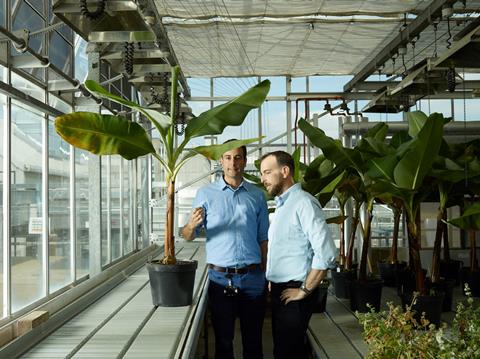
Tropic, one of the world’s leading pioneers of gene‑edited tropical crops, has secured US$105mn in Series C funding as it continues to develop new, climate-resilient crops including bananas.
With demand for its initial commercial products said to be “rapidly outpacing” supply, the company said it would use the newly acquired capital to expand plant production, strengthen supply chains, and support commercial partnerships across major export markets.
“This funding is a powerful endorsement of our team’s ability to bring breakthrough products to the hands of growers, exporters and consumers around the world,” commented CEO Gilad Gershon. “We are entering a new era, one where gene‑edited crops will significantly enhance food security and sustainability.”
‘Faster than ever’
Tropic’s banana varieties have been developed for natural resistance to diseases including Panama Disease (TR4) and Black Sigatoka. Further ahead, it suggested, the funding could also support entry into other crops.
In March 2025, it unveiled a gene-edited, non-browning banana variety designed to stay fresh after being cut. The variety, which was named one of Time Magazine’s best inventions, is apparently due for commercial launch in the US and Canada in 2026.
It has also developed a banana with a reported 12 days’ additional green shelf-life.
“2025 proved that our technology delivers – not in the distant future, but right now,” Gershon added. “With two banana varieties already on the market and demand outstripping supply, this investment enables us to scale global production and expand into new crops faster than ever before.”
Commercial launch
In 2027, the company aims to support the commercial roll-out of TR4-resistant bananas, having established a mother plantation for their propagation over the past year.
While Tropic has not publicly revealed the location of that plantation, regulatory information suggests this could be in a major banana-exporting country such as the Philippines, Colombia, or Honduras.
Tom Greene, senior director at one of the group’s funders, Corteva, said: “Tropic’s non-browning banana varieties are a promising example of how the agriculture industry is leveraging innovation to deliver new and improved choices for farmers and consumers worldwide.
“We’re thrilled to support Tropic as we continue to advance our global portfolio of next-generation solutions to help farmers produce more food and feed, sustainably.”