BASF Nunhems outlines the current state of play in the sector and says it is developing varieties to help
The leek category has good potential for further growth, despite the ongoing struggle growers face with climate change.
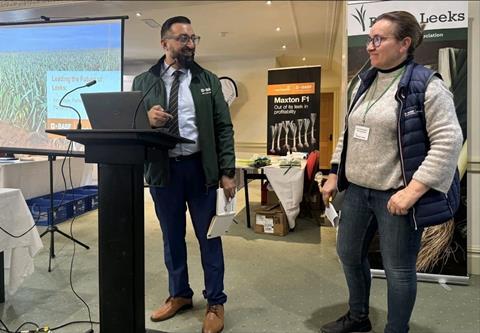
Those were among the key lines to have come out of the British Leeks Technical Event & Variety Trials this month, where the opportunities and challenges facing the sector were spelled out by industry leaders.
Among those speaking were BASF Nunhems’ Naz Ahmed and Ann Demeulenaere, who outlined some of the challenges facing UK growers, in particular when it comes to the recent wet weather.
“It’s clear that with climate change and all the rain that it’s not just the growing that’s important, but also the struggle to harvest,” Ahmed said.
From a consumer point of view, there’s hope for a bright future for the category. Worldpanel figures show that value sales in the past year grew 7.9 per cent to £93.3 million, while volumes rose a modest 0.8 per cent.
Despite being a traditional vegetable, leeks are gaining traction with younger consumers who value versatility, convenience and health. That creates a growth platform for premiumisation, new formats and usage inspiration.
“What’s exciting is the emerging demand from younger shoppers,” affirmed Ahmed. “They’re increasingly choosing leeks for their versatility, flavour and natural health cues. This suggests headroom for growth.”
Ahmed also praised the work being done by the industry campaign to help showcase the crop to younger people, and noted that more consumers are looking for convenience. Format innovation, consistency of product, usage inspiration and highlighting leeks during the season are all part of the picture for continuing to grow the category, he added.
Demeulenaere talked through how some of BASF Nunhems’ varieties can help growers with the challenges they face, including Flexiton F1 and Rapton F1 (labour reduction of 10-25 per cent), Pluston F1 and Yeston F1 (performers in extreme conditions), and Maxton F1 and Freeton F1 (performers under thrips pressure).
BASF’s UK country manager Dave Belshaw noted that the company is continuing to invest in the UK with the introduction of a local PD specialist to ensure innovation is relevant to the conditions growers face.