The CEO of the port of Dover has warned fresh produce hauliers could be stuck behind queues of summer tourist traffic as new digital EES checks are set to cause severe hold-ups
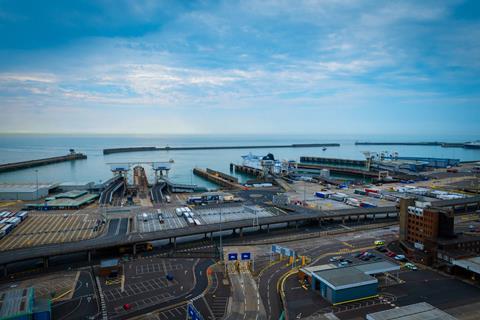
Delays at the Port of Dover caused by the new digital European Entry/Exit system (EES) checks could hold up freight transport as hauliers wait behind queues of tourists, the port’s CEO has warned.
The EES technology, which relies on face scanning and fingerprinting and is designed to eventually replace passport stamps, is causing bottlenecks at railways and airports across Europe.
Congestion at Dover seen during May half-term is expected to worsen during the summer holidays.
In May, the port of Dover handled a peak of 8,500 tourist cars on one day with delays of up to 4.5 hours, while in summer, daily volumes can regularly exceed 12,000 vehicles.
The chief executive of the Port of Dover, Doug Bannister, has written to the chair of the business and trade committee, MP Liam Byrne, to warn of the impact faced by businesses and importers.
“Behind the British tourist and community disruption will be the freight traffic, with HGVs being held on the M20 motorway whilst the authorities attempt to clear the disruption,” he wrote.
“Ironically, the vast majority of hauliers exiting the UK hold European passports and so do not need to get caught up in EES, but will do so because of the inability to bypass the queues of tourist and local traffic.”
Bannister highlighted how the impact will be greatest across just-in-time products, including medicines and fresh food. Dover handles around a third of all traded goods with the EU.
“As we have seen previously, it is still the quickest when there is severe disruption bas a lorry would need to miss 20 ferries or wait longer than 16 hours for another route to become viable, (albeit the required capacity does not then even exist),” he warned, emphasising that the only workable solution to prevent delays to HGVs is to keep tourist traffic moving.
“With Border Authorities currently maintaining the same approach as for May half term, this could cause untold disruption across Kent – far worse than we have just experienced – and will be damaging for tourism, for our ferry customers and their business, for the wider economy and for the progress the government wishes to make in the reset,” said Bannister, who said the port has been working with French, and UK, authorities to suggest solutions, including removing EES checks for summer, or at periods of key congestion that can be precisely predicted by the port
It invested £40 million to create a purpose-built facility in the Western Docks, including the provision of 84 kiosks designed to process passengers. The new facility is not currently being used as originally intended due to the inoperability of the EES kiosk technology, which is completely beyond the control of the port, Bannister said.
“French policy is that for cars the EES profile creation for cars to take place in the Eastern Docks Ferry Terminal where border capacity is far more constrained,” he said.
The warning comes as the government prepares to finalise negotiations around a new EU-UK reset deal, which is designed to ease trade friction with the bloc and including a new Sanitary and Phytosanitary (SPS) agreement that would remove physical checks on EU produce.
The Fresh Produce Consortium has warned that, while easing trade with Europe, the new checks would bring in additional delays and costs to produce imported from the rest of the world, as the UK aligns with the EU checking protocol.