Third platform version offers DNA insights with a simplified, traffic-light scoring system providing actionable recommendations
Metagen, the Australian soil health company offering DNA barcoding has launched the third version of its advanced soil testing platform.
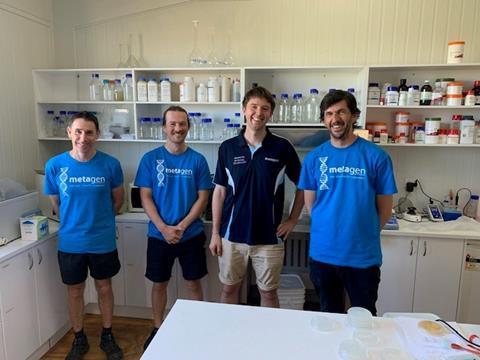
The Metagen laboratory, based at Gatton on Queensland’s Darling Downs, will provide Australian growers and researchers access to fast, locally calibrated DNA insights and a simplified, traffic-light scoring system that translates complex soil biology into actionable recommendations to improve crop yield and management.
Head of data Chris Hames said the Metagen next-generation soil health test offered DNA metabarcoding to generate an extensive list of functional soil and plant organisms, map results against a crop‑specific database, and deliver simplified, actionable metrics.
“Reports will include a high‑level interpreted summary with recommendations, full supporting data, portal access for detailed views and trend visualisation, and optional follow‑up calls with the lab,” he said.
“Australian growers face a complex dual challenge: navigating intense pressure from policy shifts, supply chain disruptions, and limited access to resources, while also managing emerging pathogens and rising levels of soil-borne disease across diverse cropping systems.
“If we can help them better manage their soil health, they can have a more resilient and stable system to fend off soil-borne pathogens. Our testing allows farmers to get insights into their soil health and track it over time so they can manage land appropriately.”
He said the platform’s third iteration was driven by evolving market demand and backed by Metagen’s deep operational experience, fine-tuned since testing began in 2022.
“When we look at a soil sample, we end up with a profile of all microbes in the soil. But soil is incredibly diverse and we’ve got thousands of samples and thousands of species per sample. The data is so complicated to try and understand as an expert, let alone an agronomist or a farmer. Farmers and agronomists do not have to be experts in soil biology, they just want to know if they need to focus on the farm as a whole or particular blocks,” he explained.
“We now have different report formats for different use cases and have updated the way we present scores in a traffic-light system.”
“Soil chemistry shows which nutrients are available for plants to absorb, while soil biology provides complementary insights. For example, we can identify organisms that help suppress disease by infecting and feeding on fungal pathogens and other organisms. These natural controls for soil-borne diseases are not revealed by soil chemistry tests alone.”
Test offers home-grown advantage
According to Hames there are key advantages for growers using an Australian facility to test their soils.
“Every soil in every paddock in Australia is unique in terms of soil biology,” he said. “We have built and calibrated our test around Australian soils and can turn around tests quickly. Local calibration is important to know what a healthy soil looks like in Australia.”
The Metagen lab has completed more than 100 sequencing runs since commercial testing began. This has included analysing more than 10,000 soil samples, generating more than 1.5bn DNA sequences and identifying more than 2mn unique soil microbes
Head of research Neil Wilson said the achievement, which represented several thousand lab tests, underscored a doubling of year-on-year demand as Australian growers increasingly pivoted toward biological farming systems to build climate and operational resilience.
“We’re helping growers manage the most complex asset they own,” Wilson said. “This data provides a literal ‘fingerprint’ of the soil microbiome, offering insights into disease suppression, nutrient cycling, and overall soil health that traditional chemistry-based testing cannot capture.
“By working directly on-farm and showing the tangible link between soil microbiology and crop outcomes across horticulture, tree crops, cotton, and cane (to name a few), we’re providing a practical roadmap that interprets data into immediate on-farm management steps to improve soil function.”
Wison said he has seen a significant shift from growers towards understanding soil biology over the past seven years.
“The ‘soil health’ term is no longer on the fringe – farmers understand the important biological diversity of their soil and that by measuring it, we understand it more,” he said. “Power comes from building that intelligence layer.”