Customs data for 2025 reveals sharp declines for bananas, pineapples and mangoes, but mandarin imports surge
Korea Customs Service has released final full-year trade statistics for 2025, providing an insight to how the nation’s fresh fruit import market adjusted following the withdrawal of tariff-free import measures.
In 2024, the Korean government allowed near tariff-free imports for a wide range of fruit categories after disruptions to domestic supply of apples and pears. The emergency exemptions were initially introduced to stabilise prices and later expanded without volume limits.
Following the presidential election and a change in administration, the exemption programme was fully withdrawn in July 2025.
As a result, import volumes declined in categories sensitive to tariff changes, while products already subject to low or zero duties continued to expand.
Despite these shifts, the overall market size in local currency terms (Korean won) remained relatively stable. After adjusting for a 4.3 per cent year-on-year exchange rate increase, the total value of imports was estimated at Won1.95 trillion (US$1.4bn), down 4.9 per cent on 2024 (Won2.05 trillion / US$1.5bn).
Bananas, pineapples and mangoes bear brunt
Bananas, pineapples and mangoes were the categories most affected by the policy reversal. Banana imports declined by 17 per cent in value terms to US$315.9m. Pineapple imports shrank by 27 per cent (to US$62.79m) and mangoes by 24 per cent (to US$122.1m).
While volume declines were more moderate, the data reveals how earlier tariff exemptions had inflated import levels in these categories.
In the case of bananas, the 2024/25 numbers likely represent peak demand and signal the maturity of the market. Limited structural growth is expected, despite gradual tariff reductions under existing free trade agreements.
Blueberries, cherries and avocados grow regardless
In contrast, imports of blueberries, cherries and avocados continued to grow regardless of the policy changes. Imports of blueberries increased by 39 per cent in value terms (to US$84.77m), cherries by 12 per cent (to US$150.78m), and avocados by 15 per cent (to US$42.37m).
These products were largely unaffected by the policy changes because their primary supply origins already benefit from low or zero tariffs.
Blueberry imports continue to complement domestic production, with a smooth transition between the Korean season and shipments from the US and Chile.
Avocado consumption is expanding, but the fruit remains unfamiliar to many Korean consumers. Ripened avocado programmes have improved accessibility, but transparency around ripening processes and brand communication remain limited.
Over time, sustained growth for avocados is likely to depend on brand-led strategies rather than importer-led positioning. Zespri’s long-term approach in Korea remains a relevant reference point.
Mandarins: the rising star
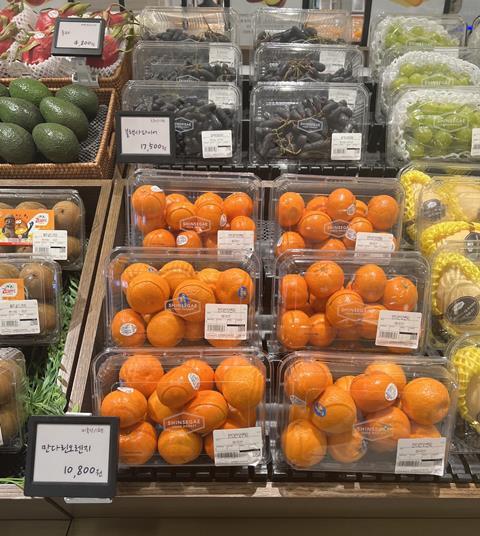
Mandarins recorded the fastest growth among imported fruits. Import value increased by 132 per cent (to US$ 21.5m) while volumes rose by 161 per cent (to 8,079 tonnes), with current supplies sourced exclusively from the US. Mandarins have overtaken grapefruit in import volume and may challenge lemons in the future.
Consumer demand has been fuelled by their easy-to-peel convenience and sweet-tart flavour profile. A shorter domestic open-field production season linked to climatic shifts have also widened the import window. Despite the rapid growth, mandarins remain unfamiliar to many consumers, with issues relating to origin, branding and seasonality.