New grapes, strawberries and pears are headlining export development efforts
Korea’s Ministry of Agriculture, Food and Rural Affairs (MAFRA) has committed to expanding its support for the uptake of new, Korean-developed varieties of fresh produce as part of efforts to increase agricultural exports.
For the past three years, MAFRA has run a project to foster and promote the utilisation of new locally-bred varieties. The project has also demonstrated the feasibility and potential for these varieties to enter overseas markets by providing support tailored to the characteristics of each country and agricultural commodity.
This project targets four key fresh export items – grapes, strawberries, pears, and paprika. The new varieties have been selected for their resilience to climate change and the preferences of overseas consumers. By developing these alternative options, the project aims to broaden the range of export varieties, extend the export period, and reduce royalty costs, thereby diversifying Korea’s export portfolio of fresh agricultural produce.
In 2025, exports of new Korean varieties of grapes, strawberries, pears, and paprika amounted to US$3.58mn (590 tonnes). For 2026, the Ministry has set the goal of increasing this total by 10 per cent.
To this end, MAFRA has said it will provide crop production manuals and training for leading export-oriented farmers, including young farmers, and will provide support in the supply of seedlings, saplings, and agricultural materials, as well as product commercialisation and marketing. Additionally, the Ministry will provide support for farmers and export consortia in concluding supply agreements to ensure stable export growth. The Ministry will also provide support for medium- and long-term research and development on new Korean varieties of agricultural produce.
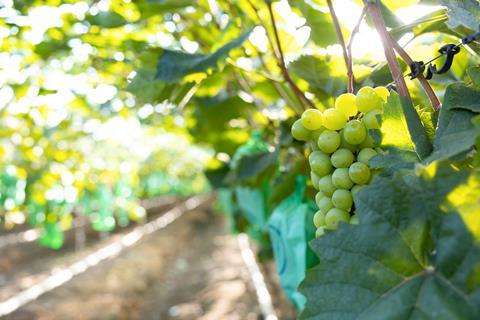
As for grapes, the ministry will expand the range of red-coloured new varieties (Glorista, Cocoball, Red Claret, Hongju Seedless, and Ruby Sweet), thereby extending the export period and offering a wider range of choices to overseas consumers. At the same time, the ministry plans to diversify export markets to the US, Canada, Russia, and other countries.
In 2025, strawberries recorded USD 72 million in exports, an increase of 4% from the previous year. As part of the efforts to maintain this steady growth in exports, the Ministry plans to develop premium markets such as the US, the Middle East, and other regions, by exporting high-quality new varieties (Honghee, Gold Berry, Pink Candy, and Arihyang). The ministry also plans to strengthen premium marketing through in-flight meal supply, promotions with hotel chains, and the launch of new varieties for overseas buyers.
In the case of pears, where export growth has slowed due to climate change and other factors, the Ministry plans to promote the cultivation of new early-maturing varieties such as Hwasan, Shinhwa, and Changjo. These varieties have earlier harvest periods than the main export variety “Shingo” and offer superior sweetness and texture. The Ministry aims to extend the export period and facilitate the entry of new Korean varieties into new markets such as Australia and Indonesia.