New technological investments, market diversification and revitalisation provide a hedge against the Philippines’ eroding market share, ongoing TR4 challenges and the latest geopolitical unrest
In 2025 the Philippines registered a significant increase in production and exports following a series of challenging years. The boost saw the Philippines rise to become the world’s second-largest exporter of bananas, behind Ecuador, and the top supplier in Asia.
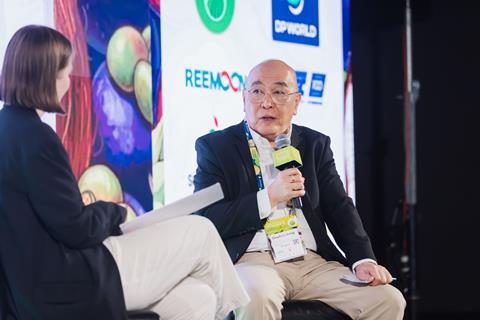
In a session on Asia’s tropical fruit trade at the recent AFL SE Asia Meet Up in Bangkok, Stephen Antig of the Pilipino Banana Growers and Exporters Association (PBGEA) outlined the industry’s ongoing recovery efforts amid considerable geopolitical challenges and continuing concerns over Tropical Race 4 (TR4) disease.
“As far as the banana trade is concerned, I would say the Philippine banana industry remains robust,” Antig said in the session.
“In 2025, we exported a total of 3mn tonnes, which is 30 per cent higher than 2024. The first quarter of 2026 saw the Philippines exporting about 700,000 tonnes, which is also about 7 per cent higher than the same period last year.”
Despite this significant recovery, Antig admitted the country has continued to lose share in some of its key markets.
“We used to have the biggest share of the market in Japan, Korea, and China, but because of the influx of Panama disease, a big part of our plantations were affected,” he said.
TR4 was first reported in the Philippines in 2005 and the industry has seen a rapid spread of the fungus since 2013.
“In the past, Taiwan was hit by TR1, and that’s the reason why we were able to enter the Japanese market because Taiwan used to be the biggest supplier of bananas in Japan, so you can say that Taiwan opened the door for us,” Antig explained. “But TR1 mutated to what is now known as TR4, which, so far, is the most virulent version of this fungus.”
As the fungus can lie dormant in soil for many years, the only known cure to TR4 is to develop a new resistant variety.
“The only way to survive right now is to do a lot of rehabilitation for areas affected by TR4, and in certain cases we have expanded areas not affected by this disease,” Antig said. “Other than that, we have to do a lot of research to identify a variety that’s tolerant, and if possible, resistant to Panama disease.”
He added that there has been increased investment in improving farm management services, soil management and adapting new technologies including AI, drones and satellites through remote sensing to identify TR4 at the earliest stages.
“Otherwise, you will continue to lose the hectares and if that happens, then you will also continue to lose your market,” he added. “We’re now preparing a revitalisation plan to improve our production and enhance efficiency, because that’s the only way to survive, especially with the mushrooming competition coming not only from South-East Asia, but even as far as Mexico, Peru, Costa Rica and Venezuela.”
Diversifying markets
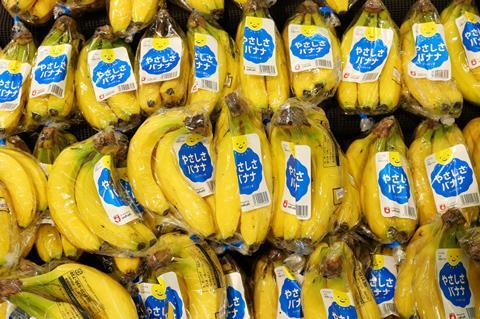
This rising competition within Asia has pushed the Philippines to diversify its markets in recent years. In 2024, the Middle East accounted for 12 per cent of the Philippines’ banana export value. Iran, in particular, had become a key destination for the country before it closed imports due to the ongoing war.
“Japan, China, and Korea have always been the traditional markets for Philippine bananas, and they will remain the traditional market for our products,” Antig said. “[But] because of the growing competition, especially from Vietnam and Cambodia – because of their geographical advantage, not to mention the bilateral relation through the Belt and Road Initiative – we simply have to look for other markets.
“In fact, we’re now considering markets like Kazakhstan, Uzbekistan, and the former satellites of the USSR. Indeed, we have been successful in shipping bananas to Vladivostok, because it takes only about seven to eight days.”
Proximity remains a priority for the global banana trade, even for consumers who prefer more local fruit.
“We’ve tried shipping to as far as LA and as far as Milan and Brussels, and even if the fruit arrives at those places in its best condition because of the latest technology, it’s a question of mindset, especially for Europeans,” Antig explained.
“Even if your fruit arrives in the best condition, they would rather buy fruit from nearer suppliers. That’s what the major importers told us in Europe.”
That’s largely the reason why the Philippines continues to focus on Japan, China, Korea, and other Asian markets.
“We believe that we will be able to deliver fresher fruit and faster as compared to those that are located in distant countries, like Ecuador, for instance.”
Quality is key
Beyond development to tackle TR4 challenges, the Philippines is looking to improve its production quality and efficiency.
“I believe we have to continue improving our quality, because that’s the ace that we still hold. To do that we have to embark on a more efficient way of producing bananas, because right now that’s one of the main problems,” Antig explained. “Our production cost is higher than our competitors’, so we’re looking into possibly mechanising some of the practices being employed in the plantation. Right now the manpower ratio for every hectare is about 2:1, that’s for every hectare you need two individual workers, but through mechanisation we’re hoping to reduce that to 0.89:1 or even 1:1.”
Antig also outlined investments in packaging and supply chain to reduce bruising in the fruit.
“Hopefully, once these measures are all in place, we should be able to meet the growing demand for bananas,” Antig said.
“It’s a tall order, but that’s the only way to go. Otherwise, we will not be sustainable.”
This article appears in the upcoming Asiafruit June edition. For more coverage on Asia’s tropical fruit trade subscribe HERE.