Aneberries and CABC concerned about impact on producers after USDC set margins ranging from 3.37-5.28 per cent on Mexican exports
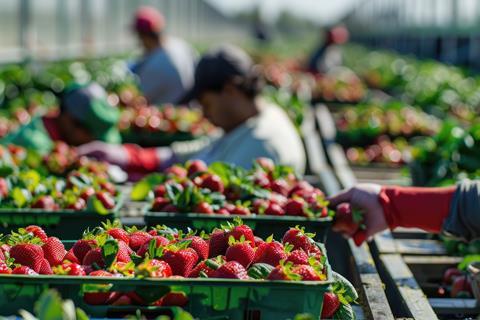
Mexican berry association Aneberries and the Baja California Agricultural Council (CABC) have voiced their concern over the tariffs to be levied on Mexican strawberry imports to US.
The move follows a petition filed by US growers claiming that Mexico is dumping winter strawberries in the US market, distorting domestic conditions and harming local producers and workers. Imports covered by the investigation include all fresh and chilled strawberries entering the US or sold between 1 November and 31 March.
“Following the publication in the Federal Register of the preliminary determination issued by the US Department of Commerce (USDOC) regarding the anti-dumping investigation into fresh winter strawberries from Mexico, Aneberries and the CABC wish to express our concern regarding the implications for the Mexican production and export sector,” Aneberries and CABC said in a statement.
The US Department of Commerce has established preliminary tariffs of 5.28 per cent for Driscoll’s and 3.37 per cent for Mainland Farms, alongside a tariff of 4.83 per cent for all other exporters subject to this investigation.
The agency has also instructed US Customs and Border Protection (CBP) to require cash deposits corresponding to the applicable margin for each import transaction upon the fruit’s entry into US territory, based on the specific importer handling the operation.
“Aneberries and the Baja California Agricultural Council will continue to represent and support the sector, closely monitoring the subsequent stages of the procedure and the instructions issued by US authorities,” the organisation said.
“We will provide objective information and technical data to contribute to a proper assessment of the sector’s conditions, prioritising institutional dialogue and the responsible defence of the competitiveness of Mexican strawberries. The Mexican strawberry sector is a strategic activity for thousands of producers, workers, and rural communities, and is part of a supply chain that is highly integrated with the US.”
The Mexican government said the assumptions underlying this US Department of Commerce determination are inconsistent with the World Trade Organisation’s Agreement on Implementation of Article VI of the General Agreement on Tariffs and Trade 1994, as well as with various articles of the US-Mexico-Canada Agreement (USMCA).