Polly uses AI-driven image recognition and precision air bursts to pollinate tomatoes autonomously, delivering yield improvements of 2–6 per cent
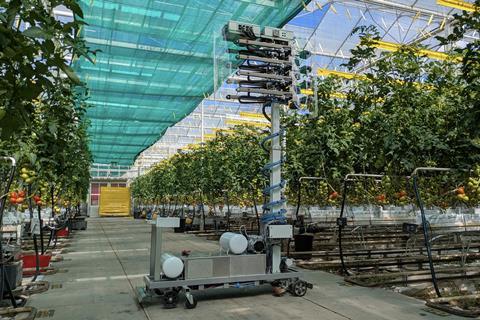
Biological control specialist Biobest has introduced Polly, a pollination robot designed for tomato growers.
The technology was developed, refined and tested extensively over a five-year period with Arugga AI Farming in commercial greenhouses across Europe and North America, the group noted.
“Arugga’s pollination robots are designed to work alongside bumblebees,” explained Jorden van de Walle, product manager for pollination at Biobest.
“They provide an additional layer of pollination security, helping maintain consistent pollination even when environmental conditions limit bumblebee activity.
”At the same time, they can enhance overall pollination performance, helping growers maximise their yield potential and improve profitability,” he said.
Trials ”consistently demonstrated” yield improvements of 2–6 per cent, van de Walle continued, while in most cases an increase of just 1.5 per cent is enough to achieve a positive return on investment.
“Over the past year, we have also achieved two major milestones that give us full confidence in Polly’s readiness for commercial launch,” he outlined.
“First, we have significantly increased the robot’s operating speed, meaning that just one Polly robot is now sufficient to cover one hectare.
”Second, Polly is now available with a fully autonomous base,” said van de Walle. “Growers simply position the robot in the first row at the start of the day, and Polly takes care of pollination throughout the day without any further intervention.”
Tomatoes are self-pollinating, Biobest pointed out, meaning that each flower contains both pollen-bearing anthers and a female stigma.
Using advanced cameras and intelligent image recognition, Polly analyses individual flowers to identify those ready for pollination, before delivering precisely controlled bursts of air to stimulate pollen release and maximise fruit set.
Bumblebees are highly effective pollinators, but certain environmental conditions can limit their activity and affect pollination performance.
“In winter, shorter days, lower light levels, supplementary LED lighting and the use of energy-saving thermal screens can all reduce their pollination efficiency and yield,” he highlighted.
“In summer, temperatures above 35°C can also negatively affect bumblebee activity and pollination performance.”
According to Biobest, this is where Polly makes a difference. During the darkest winter days and hottest summer months, the robot continues pollinating, day in and day out.
“By supporting pollination during challenging periods, Polly helps to minimise fluctuations in pollination rates,” said van de Walle. This gives growers peace of mind and supports higher yields.
”For high-tech tomato growers seeking to maximise every percentage point of yield and profitability, Polly provides a valuable complement to bumblebee pollination.
”It also offers an effective solution for tomato production systems without bumblebees,” he added.
Click here to register for Fruitnet Tomato Congress, which takes place in Granada on 5-6 November